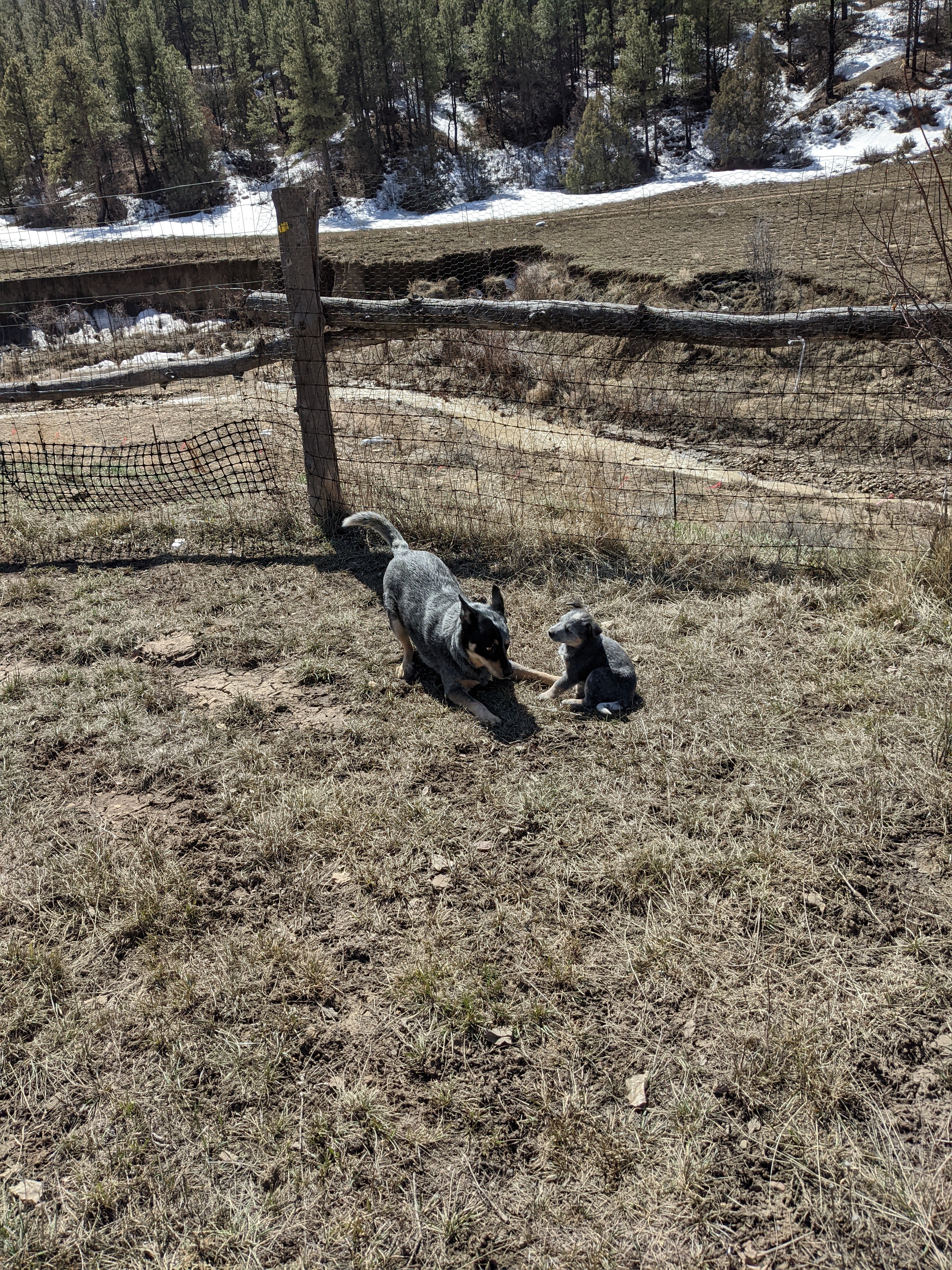
We welcomed Zane Gray into our home a few days ago. He is a local Blue Heeler pup, one of 9 born just over the mountain from us on a working ranch. His dad looks like Clair’s twin. Alan and I spent a couple months deciding whether or not a second dog was a good decision for us. We’re not getting any younger (surprise!), and 2 dogs requires about 4 times the work of one. But we have also noticed that Clair often seems lonely, and is turning to us for attention more and more. We hope that having a “little brother” will give her someone to play with other than us.
Favorite sleeping place: in with the muddy boots
So far, it seems to be a good choice. Zane is still too young to run and play much, preferring to spend his waking hours wiggling and biting anything that comes near his jaws, but Clair is trying. We named him after my favorite classic Western author, mostly because Alan and I keep saying that we are living inside a Zane Gray novel (you know, the one where the hero escapes with the girl to live out their days isolated in a remote canyon.) And he’s grey (or gray, if you prefer the British version). Also, I imagine he will fit the obvious nickname: Zany.
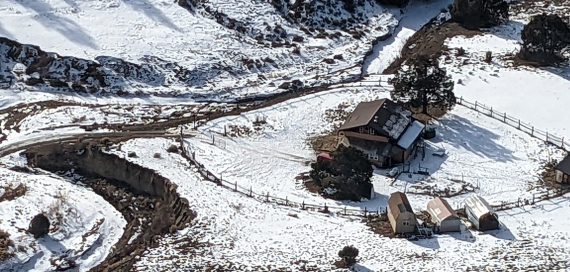
Otherwise, planting willows and grass seed and building fences have been my main activities around here recently, (you can see some of the fence that needs replacing above) but last night, after several perfectly lovely spring days, a major storm moved in, dumping squalls of rain, sleet and snow. That makes it a good day to bake cookies! And watch the cistern (remember the cistern?) fill up: 400 gallons so far.
It’s the FIRST state to guarantee free college tuition for ALL residents, regardless of age, full-or-part time status. This was signed by Governor Lujan 3 days ago.
There’s only 2.1 million people here. Lots of space.
Other than 2 counties (ours being one), the state is solidly blue and “blue-collar”.
You are encouraged to capture rainwater off your roof! (In Colorado, rainwater belongs to the state and you can only gather a couple 55-gallon drums worth from your roof. Everyone around has some sort of cistern, above or below ground to capture every drip of water that falls on their rooftops. So far, we have 1, but plan to add 2 underground tanks in the future for winter use. (There’s also a cistern connected to the well).
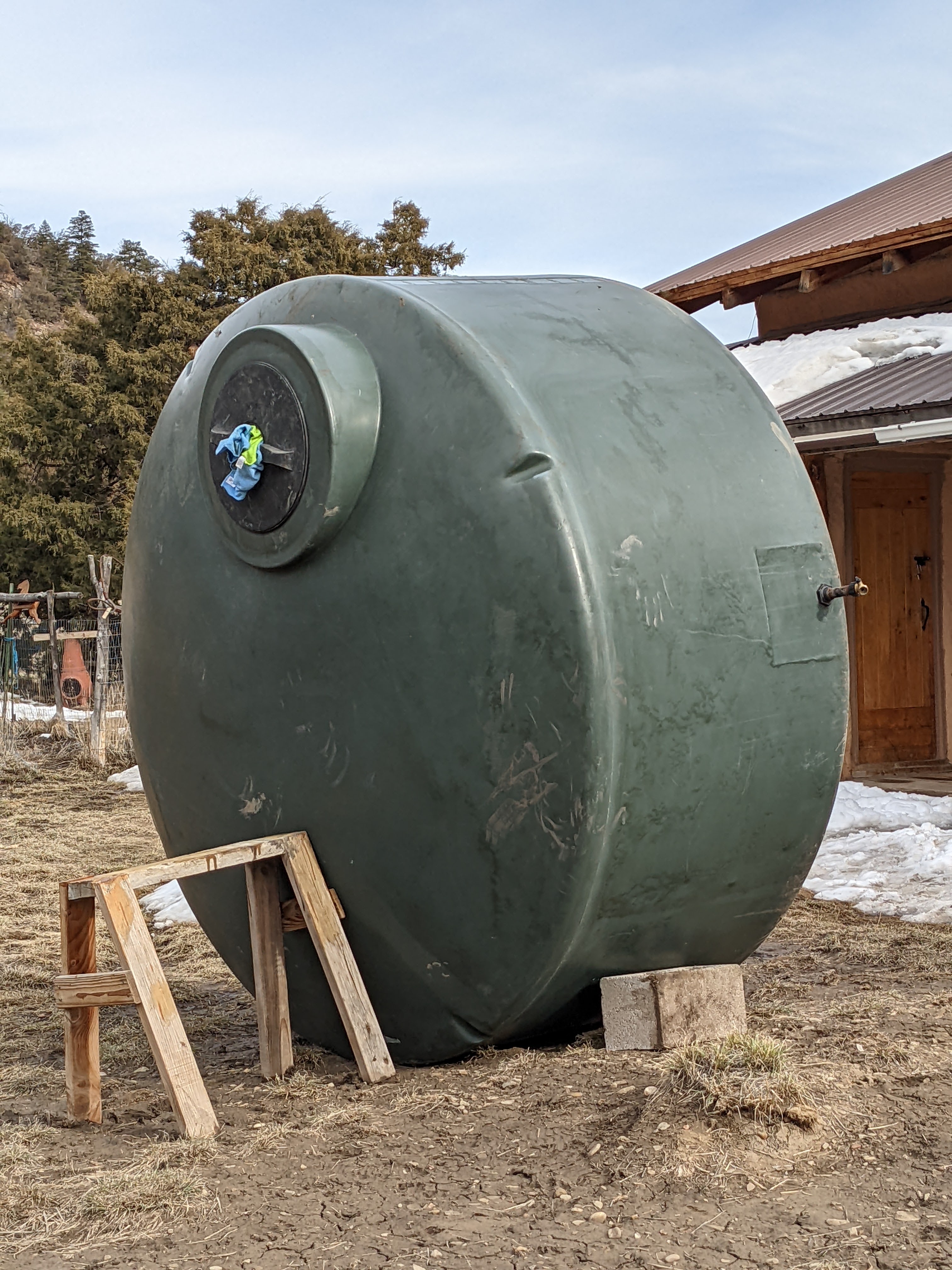
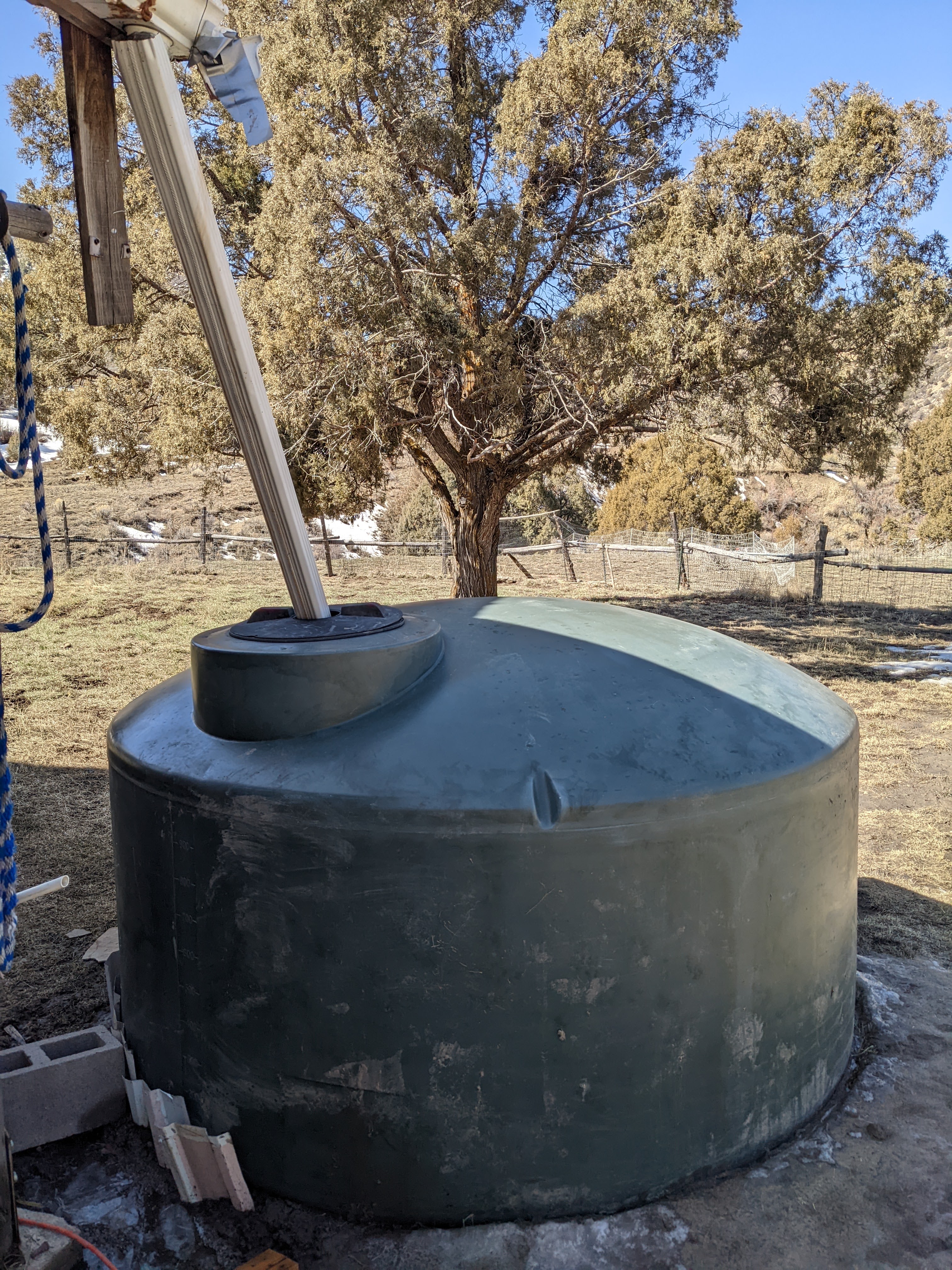
Our above ground 1000 gal cistern is pretty old, and had a 12″ crack on the bottom. We weren’t sure if we could repair it, but decided to try.
Cistern ready to work on.
First, we lifted it up, which took some serious leverage, then rolled it into the sun to dry.
Alan INSIDE the tank: the background is really just light filtering though the bottom, not a scene from “Stranger Things”!
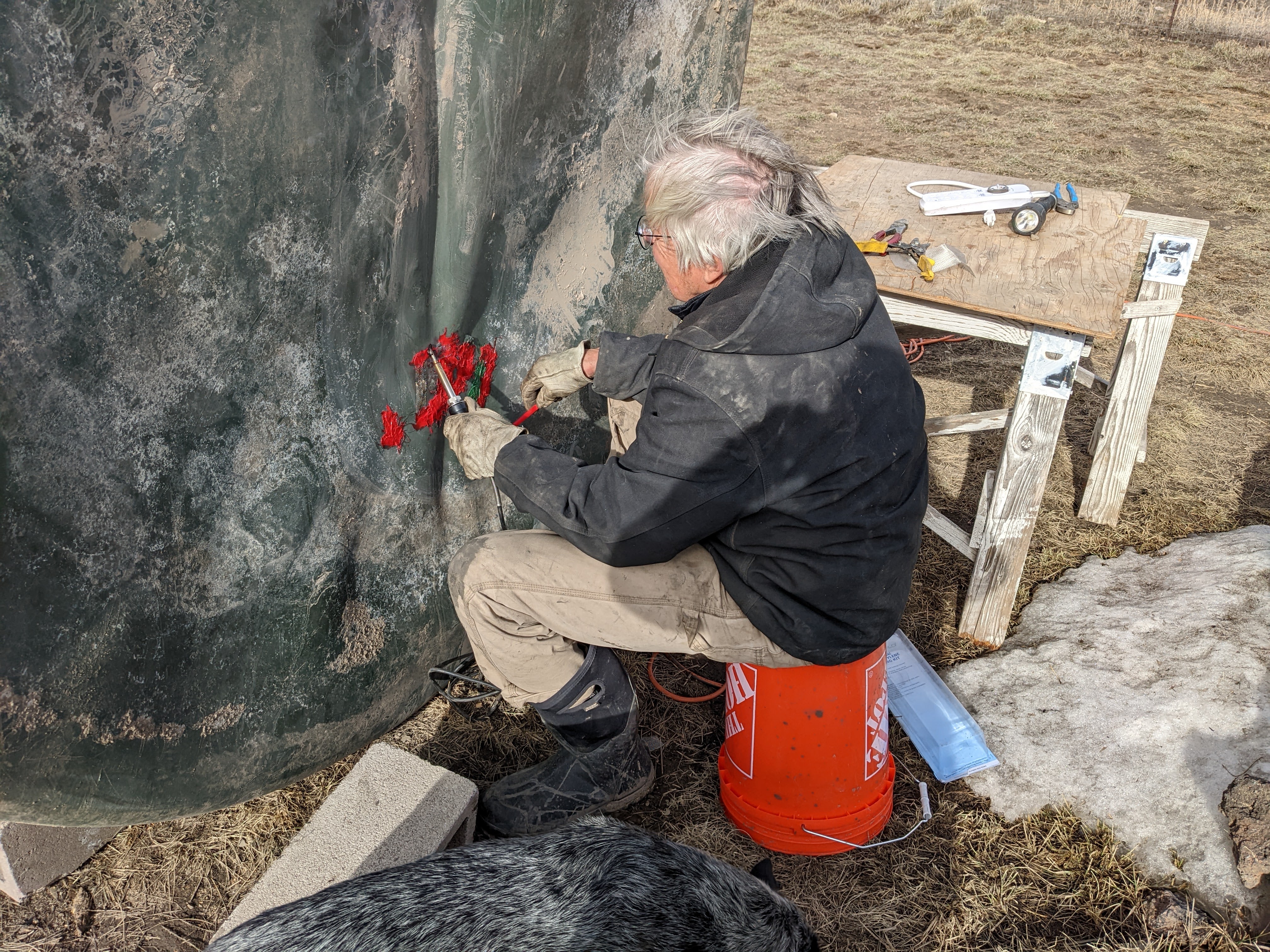
There’s a tool we knew nothing about: a polypropylene welding gun, which we ordered, along with plastic welding rods and stainless steel mesh. Alan started by climbing inside the thing and cleaning some of the muck out, using a pump and many, many rags. Cisterns are supposed to have up to 4″ of sludge on the bottom, an anaerobic mush that works to clean rainwater of any heavy metals and bacteria. It took a while to get the gook out so he could even sit inside. He had to wear a respirator against the plastic fumes and then began melting the mesh and welding the plastic over it. It took 3 hours. I was his assistant, handing him things, disposing of the sludge (great garden compost!).
Alan outside the tank. You can see where the cracks were.
Once done with the inside, he repeated the work on the outside. That was much easier. In the meantime, I was leveling the site the tank sits on, as it had gotten mucked up and the leak had caused a lot of the ground to slough away. It was like working with concrete, using a leveler and trowel.
Then, we managed to roll the thing back into place and lower it down slowly. The downspout fit in just as it started to rain. And now we have 4″ of fresh water. I’ve tested it several times and it is clean and potable! However, we have ordered a new gutter system that includes filters specific for rainwater capture, and plan to not drink it until that is installed. Who knows when some birds might come and poop on the roof!
Cistern back in place, awaiting a new gutter system and more RAIN.
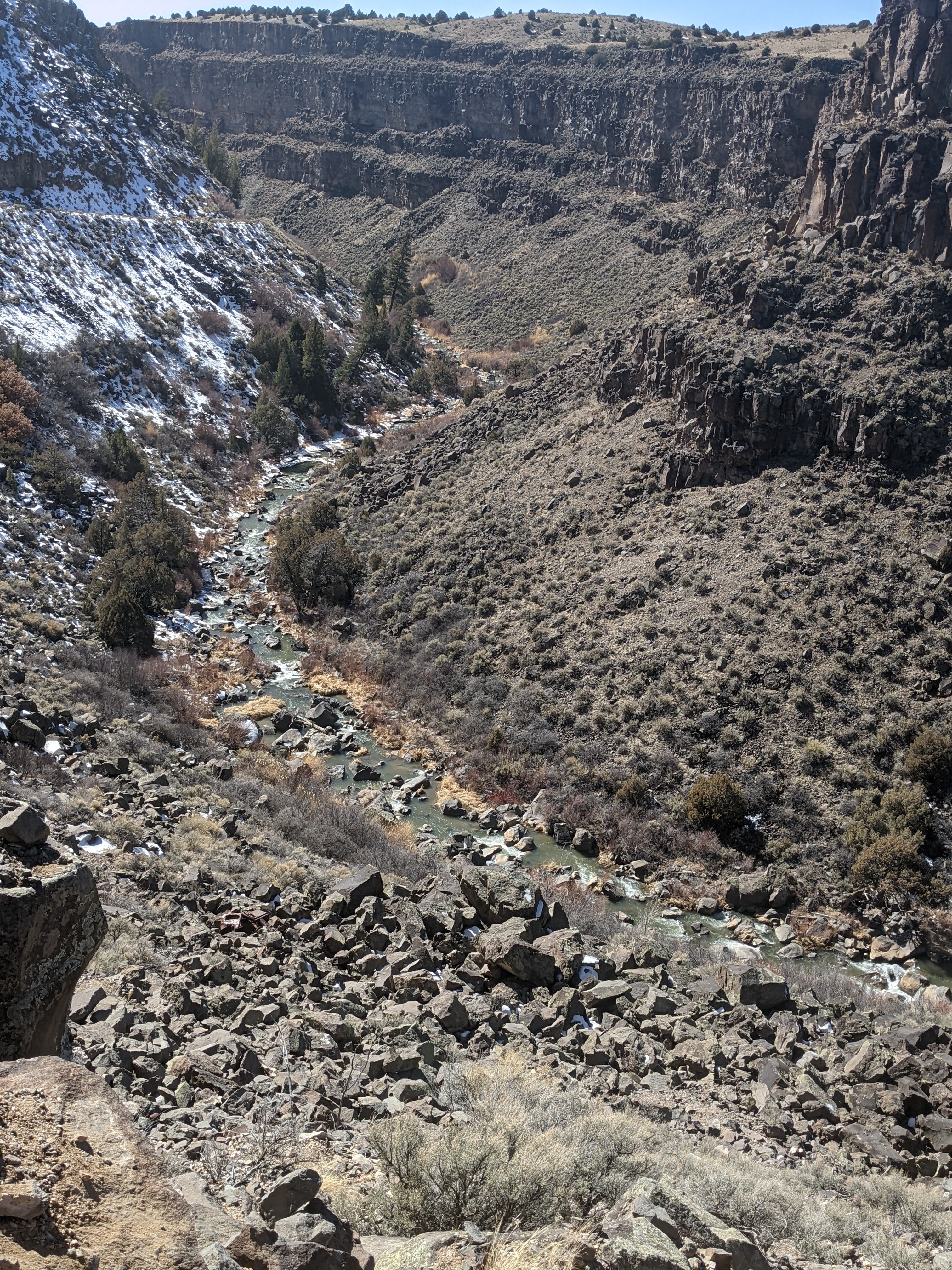
One of the long-term projects here involves trying to control some of the never-ending erosion right around the house. Not that we can, or even want to stop the water from doing what it does. In arroyo country of the southwest, the slow carving out of land is stark, dramatic, and constantly changing. What we want to do is slow it down, stop the damage from cattle, and start to build a healthy riparian zone around some of the creek. The alternative is that eventually (20 years or so) our house will land in the creek.
A pretty happy section of the creek: the grasses and willows have slowed the erosion and allowed a flatter stream bank to develop.
What makes it fun, in my view, is that doing this work doesn’t require a lot of know-how, heavy equipment, money or tools. It’s the kind of project that I enjoy most – low tech with immediate rewards. I’ve found that simple solutions usually work best: an Occam’s Razor kind of philosophy. The mantra of the jury-rigger set.
Foraging bag
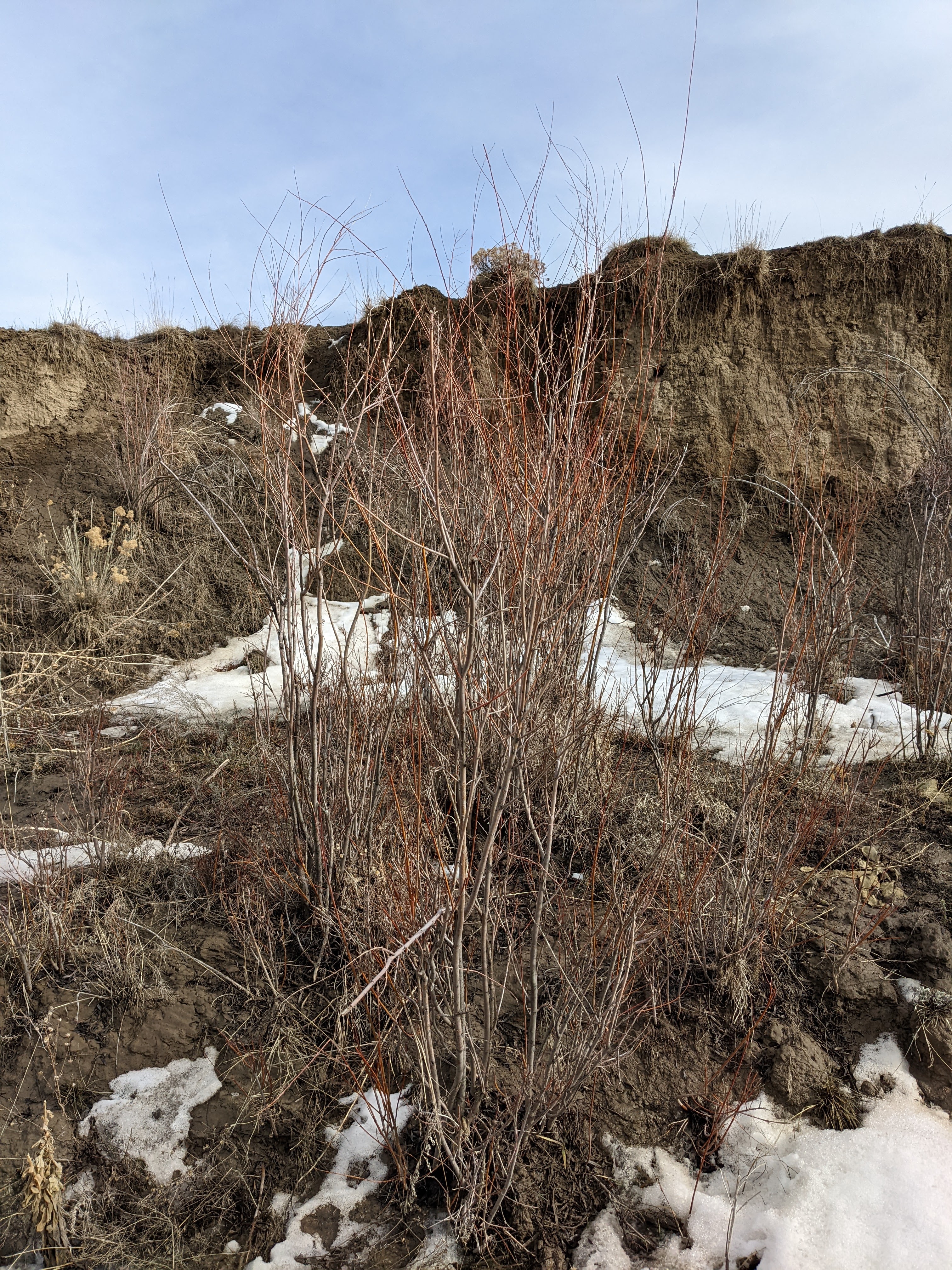
A few days ago, Alan and I took a walk down the arroyo, slipping and sliding around the snow and mud, to find and cut branches of healthy willow shrubs. I used a foraging bag, which is water proof and holds a lot. I use it to collect herbs in the summer and carry schoolwork when traveling.
WIllowWillow cuttings
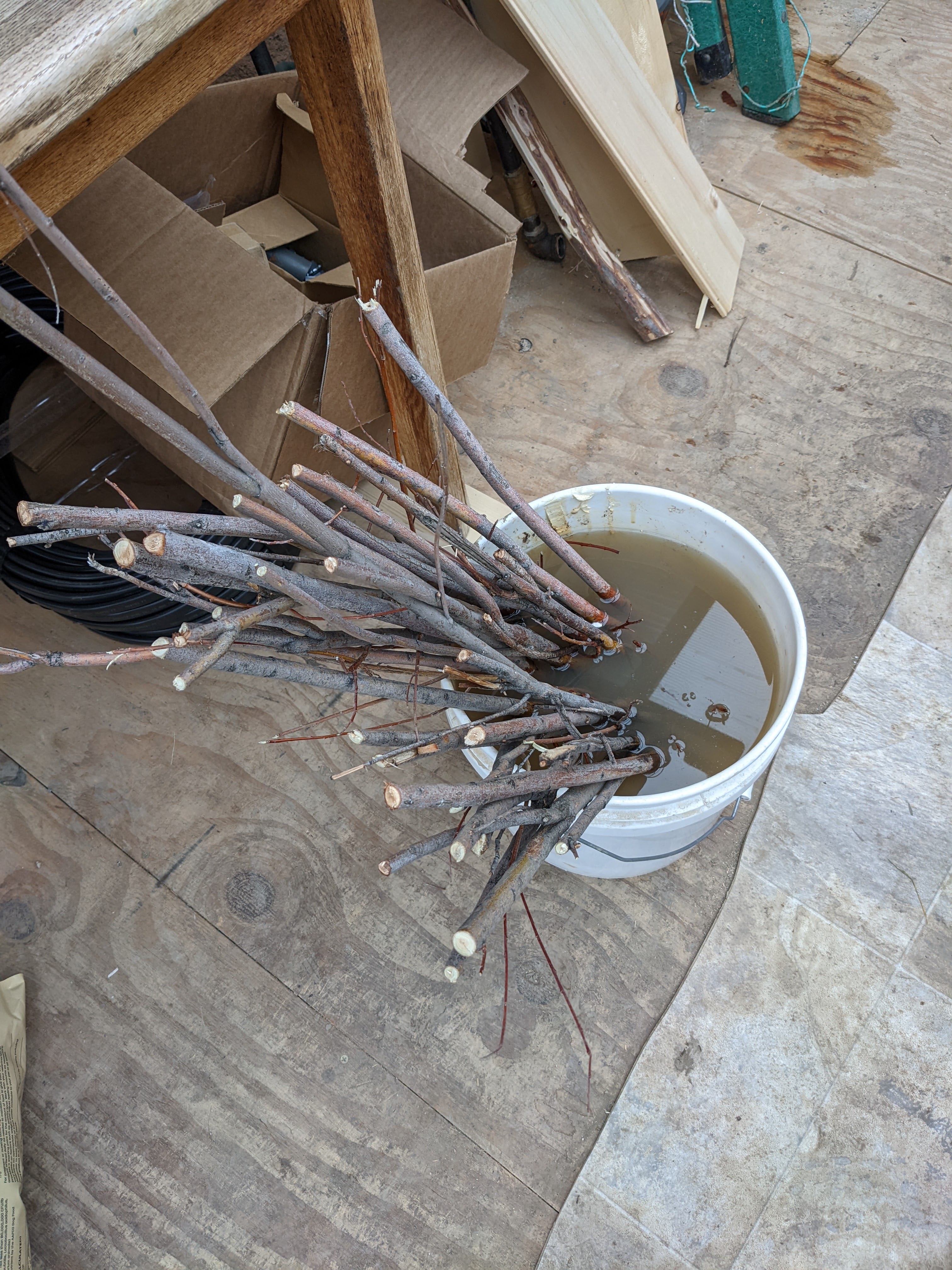
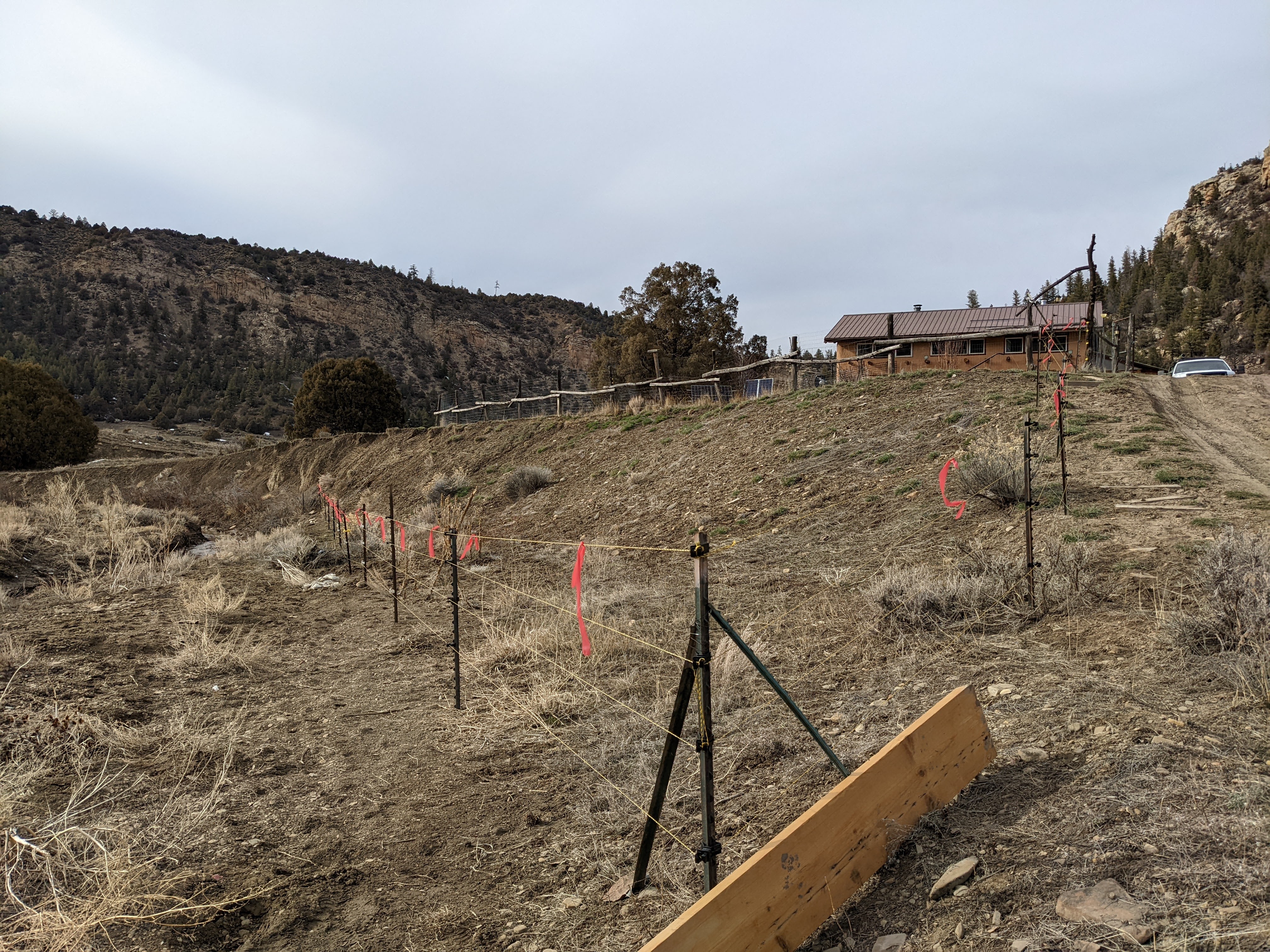
We gathered a couple dozen cuttings, and they are sitting in a bucket now, starting to root while I finish building the fence around the first replanting area. Actually, the fence is finished, just waiting to hook up the solar fence battery.
Solar “suitcase”: we’ve used these for years for our cows, bees and chickens
In the strange division of labor that all couples develop, most of this project is mine. (On the other hand, fixing the cistern, a future post, is Alan’s). Maybe because this is sort of “gardening” and that has always been my bailiwick?
Planting area (the plank in the foreground is used to cross the creek when I don’t have my rubber boots on)
The plan is to put in about 50 willows here, which involves shoving the cuttings about a foot into the soft ground. That’s it. Then, I’ll plant something called “streambank wheat” and dryland wildflowers, transplant some sage bushes and rabbit brush from the meadow above. Because we miss our aspens, I’ll put a few up on top, but that’s just icing on the cake. We’ll have to water it all for a month or so, if it doesn’t rain, but after that, these plants pretty much take care of themselves, as long as cows can’t come in and trample them. The red ribbon is to warn elk that there’s a new fence here!
Planting
Upper part of this section, blocked by a portable electric fence to keep cows out. The bank is steeper than it looks here. Maybe we can plant it, too someday.
I have one other area a little downstream marked off for this project and hope to get them both done before hot weather kicks in.
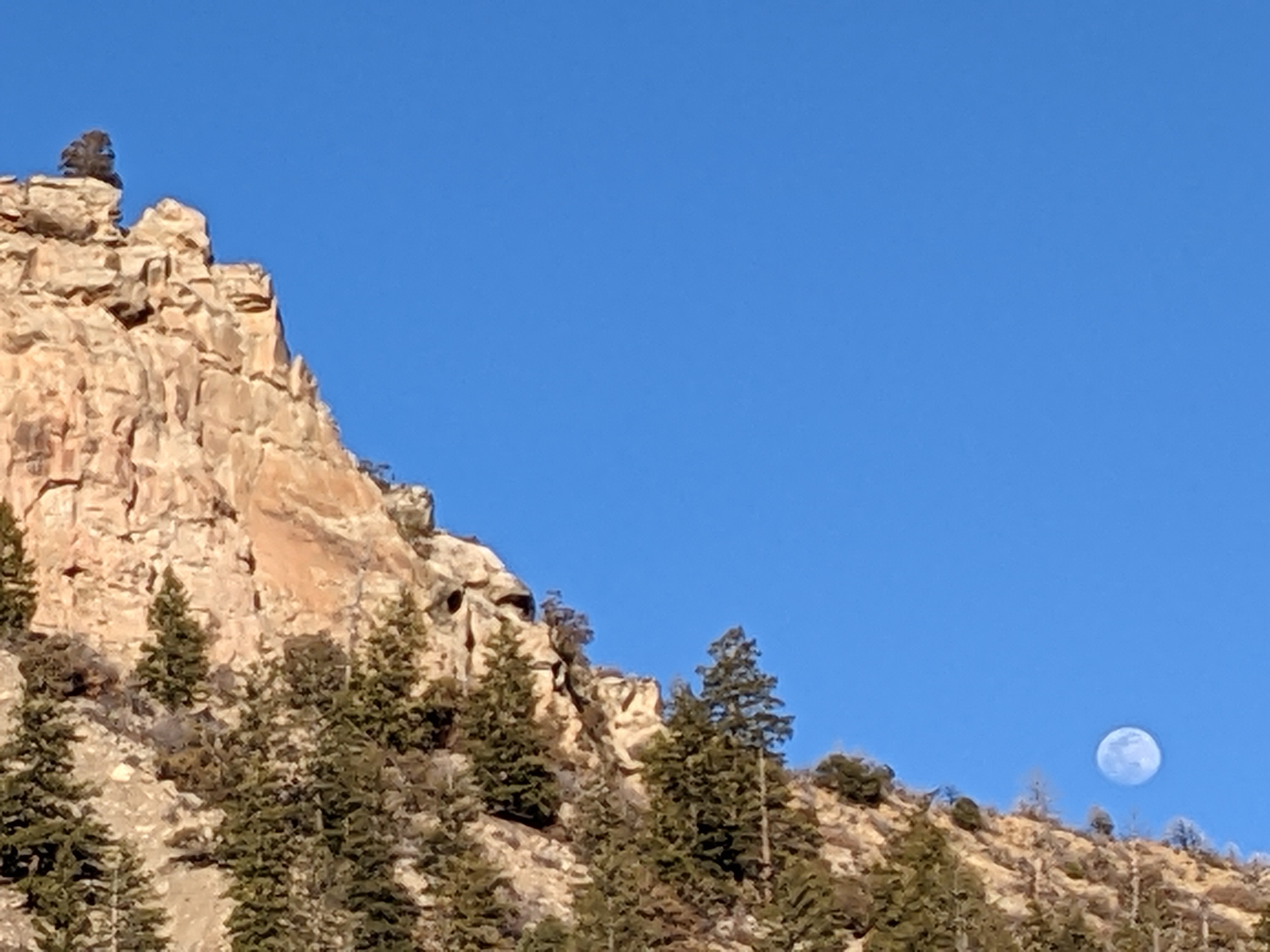
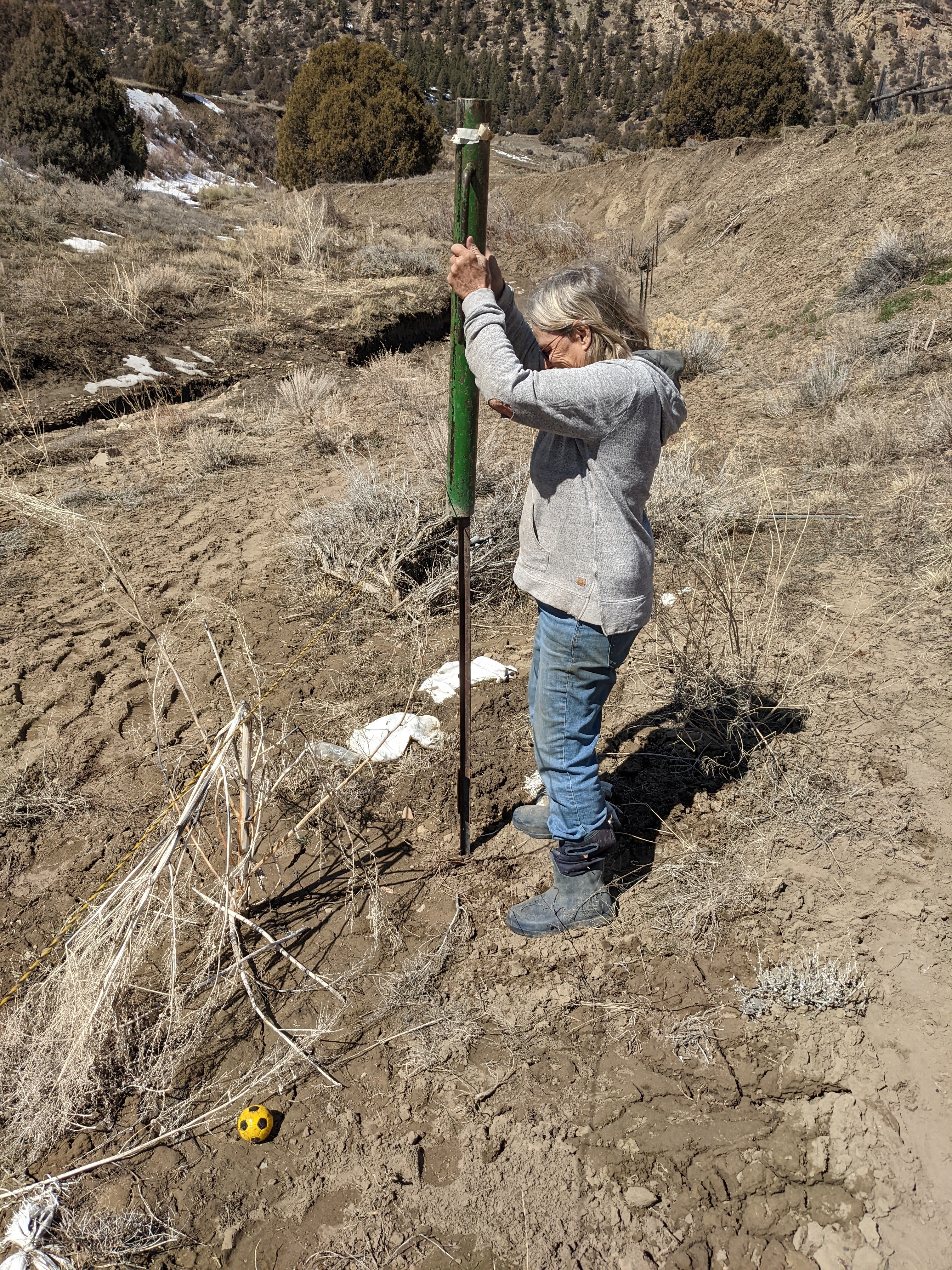
There’s been a couple of days of stunning t-shirt weather, and nearly all the snow was gone. The full moon was amazing, Alan got a lot of work done on the well, and I started building a fence around a “regeneration” site.
Full moon risingThe well vaultFence Posts
Last night, we had a weather forecast for a “small storm; less than 1″ of snow” . We woke up to this:
12″ fell in 3 hours this morning in whiteout conditions
We knew that the creek would be rising rapidly, and thought about packing up and going camping for a while to avoid the mess. Instead, after waffling a bit, we decided to tough it out and see what nature brings to us. I mean, that’s why we decided to stay here through the winter: to see what happens in this rough and tumble canyon. This is what we have this afternoon:
The driveway looking downstream
Where yesterday was a dry arroyo, today a true “creek” is crossing our driveway, about a foot deep at the ford and growing by the minute. Down by the highway, it is apparently several feet deep; impassable for now, overflowing the culverts. Overnight, it should slow and freeze, so we’re going to run into town early and load up on groceries and generator gas to last a couple weeks.
Our neighbors have been wonderful, calling to check up on us, let us know what’s happening downstream or offer to buy anything we need. Not sure how they’d get it to us, but it’s the thought that counts. We’ve talked to the Rio Arriba County road crew, who are very familiar with this yearly event and will eventually come in and do what they can to improve the road conditions.
While all of this is understandably somewhat anxiety-producing for us, we also feel pretty excited and happy. We’re safe and warm, and surrounded by unbelievable beauty, and both Alan and I take great solace in seeing Mother Nature have her way.
In the meantime, we are baking cookies and enjoying Volodymyr Zelenskyy’s TV show: “Servant of the People” on Netflix.
Enjoying the flood
We wish everyone a Happy St. Patrick’s Day, and a warm welcome to Spring!
I actually can’t imagine boiling these guys to death. (courtesy of GettyImages)
Last night I dreamed that there were giant Alaskan King Crabs in Monero Creek right in front of our house. I was trying to catch them for dinner and explaining to Alan about how to get the meat out of them.
It brought back memories of my brief career as a crab shaker in Copalis Beach, WA when I was 18. The nameless business was based in a 8′ x 16′ windowless shed run by 2 guys. Inside was divided into 2 rooms. My job was to stand at a 4′ square, stainless steel table with a raised lip, divided into 4 quarters, and shake crab. I wore full raingear: waterproof pants, coats, boots, rubber gloves, and hat. The boiled crab got dumped from a huge steamer onto the table, and I and 3 other women, Amazonian biker chicks, would grab a crab, break it up, and bang the sides of our palms on the lip, thereby releasing the meat from inside the shell. Every hour or so, one of the owners came by and scooped the meat onto a scale. Our portion was weighed, then the meat taken back to the canning room. We weren’t allowed back there, but I caught glimpses of piles of canned crab in unlabelled tuna cans. The shells were tossed on the floor to be swept up later. The room was sweltering and so steamy we could barely see each other. We got paid minimum wage ($1.60) plus more based on weight. I was pretty tiny back then, about 95#, and the table was too tall for me to be able to bang hard. so the biker ladies found me a box to stand on. They took me under their wing, showed me their tattoos, road rashes, and Harleys, and sometimes pushed a bit of their meat into my quarter. We smoked pot in the back during breaks.
At the end of the day, the Harleys would spin off, and I’d either hitchhike or wait for a ride from one of the folks back in Moclips. I smelled like rotten crabmeat. Really rank. Once home, I’d peel everything off and jump in the shower. My hands were swollen, red and ached.
We were supposed to get paid weekly, but didn’t, and after a couple weeks I complained. The owners promised to pay us all cash the following morning. That evening, I waited an hour for my ride, then went back to the shed to use the phone. A van was backed up to the door, and the guys were hauling out the huge steamer. I saw boxes of cans in the back. Realizing that they were taking a runner, I got angry and asked what was up. “Oh, we’re taking the steamer to get repaired”. I didn’t believe them and demanded my pay (I probably didn’t sound very demanding, being quite shy back then, but I stuck to it). One finally handed over a whopping $160. I said they’d better pay the other ladies, too. They said “of course!”. Right then, my ride appeared, so I took off.
It ended up that they had stolen that crab from a legitimate operation in Aberdeen, and had done it a number of times all across the Olympic Peninsula. They got busted and I had to talk to the police. The biker chicks disappeared, too. 🙂
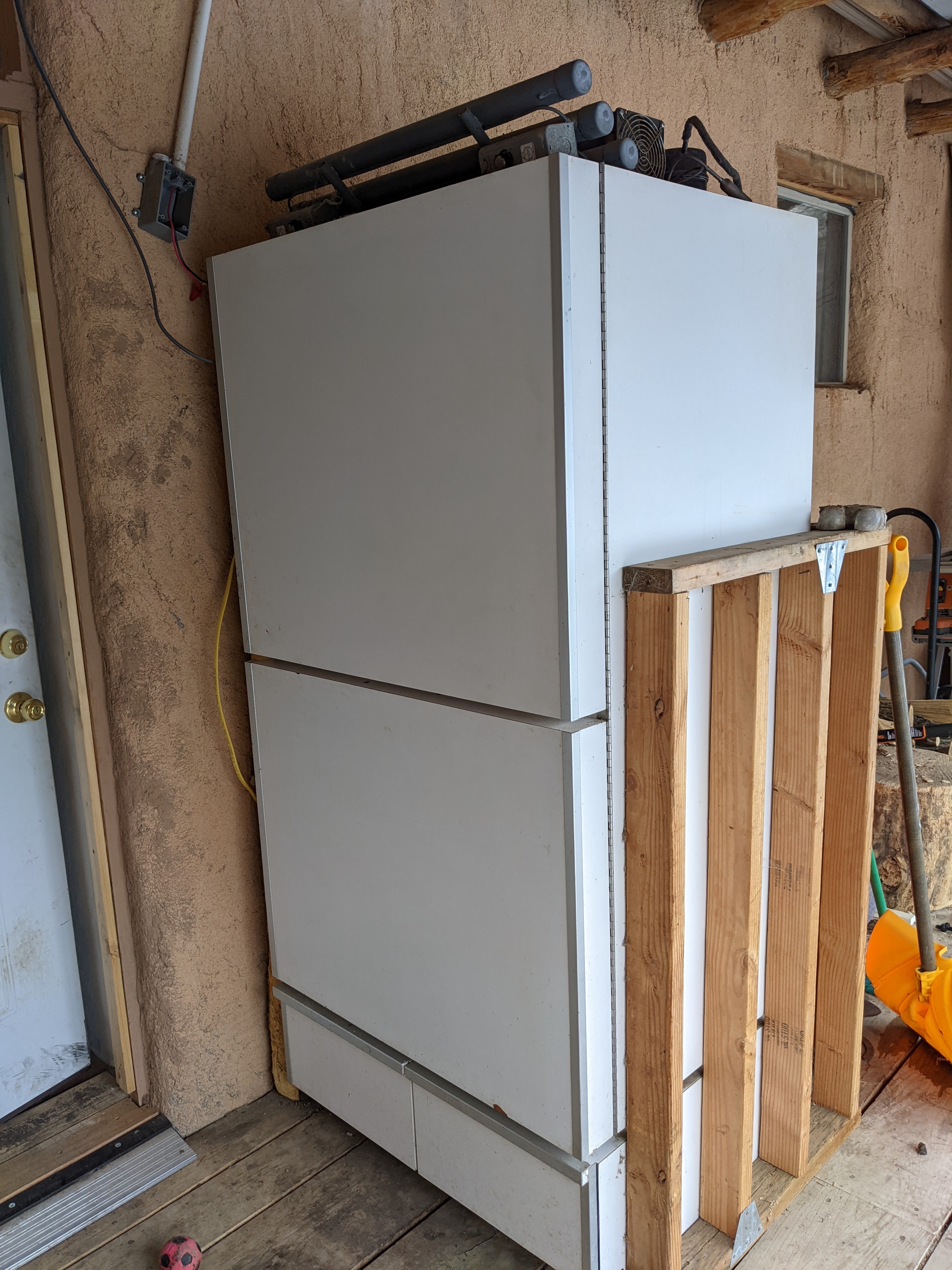
In other news, we now have a working solar fridge. Still some work to do to enclose it, etc., but a great step forward.
This is the time of year when winter seems to never end…and doesn’t it seem as if climate change makes winter start later and last longer? The past few days have been cold, blustery, and full of flurries that only add up to a few inches of the white stuff. Everything is brown and white, even the sky has been dull. This weather makes me think about camping. Hiking! Backpacking! Sleeping high in the mountains, surrounded by aspens and water, blue skies and flowers!
Last fall, we lived in Pippin, our 14′ camper, for 3 months while we waited to close on 4Fords. Looking back, both Alan and I realize that we had a blast during that time. We are not the type to be full-time RVers, we like having roots too much, but, geez, the simplicity of camping is awesome. Over the years, we have called all three of our homes (Boulder, Bayfield, and now Dulce) “Basecamp“. Those homes have been our roots, yes, but they’ve also been where we hang out while planning the next adventure. Our homes are really just big storage units for our camping life. We have a whole shed full of tents, sleeping bags, cookstoves, backpacks, water filters, dehydrated food, and the dehydrator to make it. Camp chairs, bandanas, bear vaults, GPS, critter mesh bags…oh, the gear!
We never really wanted a camper, preferring tents, but decided that having hard sides would expand our camping season. Enter a 14′ GeoPro, fondly called “Pippin”.
Pippin in the South San Juans
The bed inside is only 6’x6′, not long enough for Alan, so we built a “bed-extender” and bought a fancy custom mattress. Hey, compared to 4Fords, Pippin has running water and a shower! (It has a toilet, too, but we don’t use it, liking an outdoor loo more).
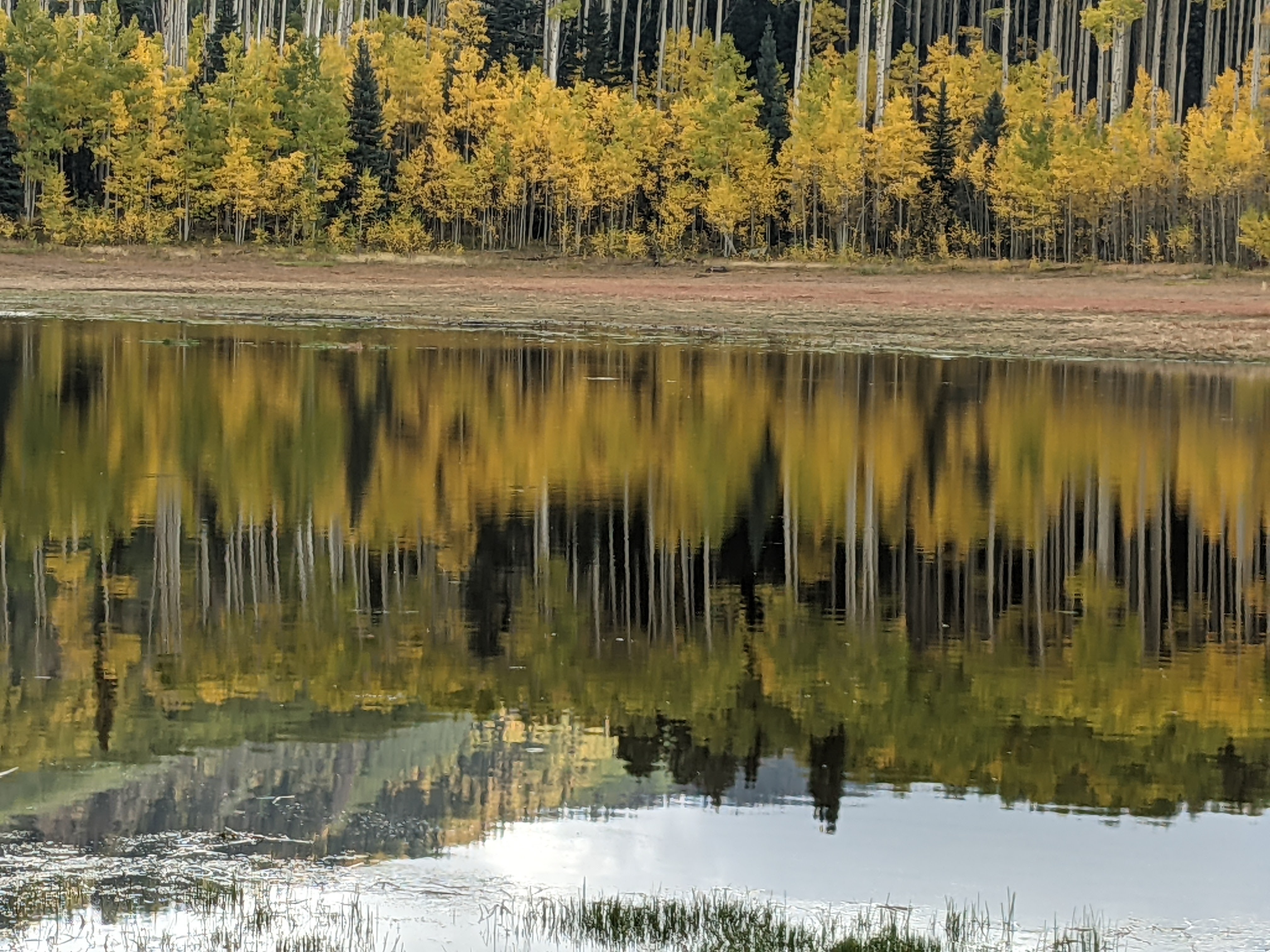
Even with all the work we’re having to do around here, we’re already planning trips with Pippin, who is currently stored in Chama, for the spring (desert), summer (Point Sublime, Grand Canyon), and fall (anywhere with aspens: Crested Butte?). This time of year demands that we dream of color, cerulean blue, emerald green, the yellow of quaking leaves, the silver flip of a trout, the orange flash of a tanager.
This is what I think about during the dull days of late winter: the colors of camping.
One of several “one-rock dams” or ORDs. This only shows a small part
Yesterday we achieved both a wonderful high tech project and started a major low tech improvement: Alan finished the first solar array, which is now online and working, and I started to build one rock dams (ORDs) and zuni bowls to help control the flow of water as it melts off the road and races down the arroyo. (There’s links to explain these in earlier posts)
Essentially, while Alan spliced wires, attached surge protectors and set up monitoring apps, I spent the day playing in the mud, a pastime I now remember I used to love. Did you play in the mud as a kid? Yesterday, I even floated a bark-boat down the creek (unfortunately, it sank when Clair tried to eat it). I felt about 6 years old. I need a new pair of rubber boots, as mine are not tall enough and I ended up wearing bathtubs instead of boots, along with the 10 pounds of mud on the outside. I know that most people will be horrified to imagine doing such work, but I swear, it’s fun. I don’t have to do it, I don’t overdo it, and I quit if it starts to feel like a chore. Who needs a gym?
Alan contemplates the layout. This will be enclosed in a cabinet once completedThis is the worst spot on the county road by our property. (It’s worse closer to the highway). I’m building a “water bar” to drain it more quickly
The snow is melting fast here, and it astounds us how much damage it can do in a very short time. It also dries out quickly, thank goodness.
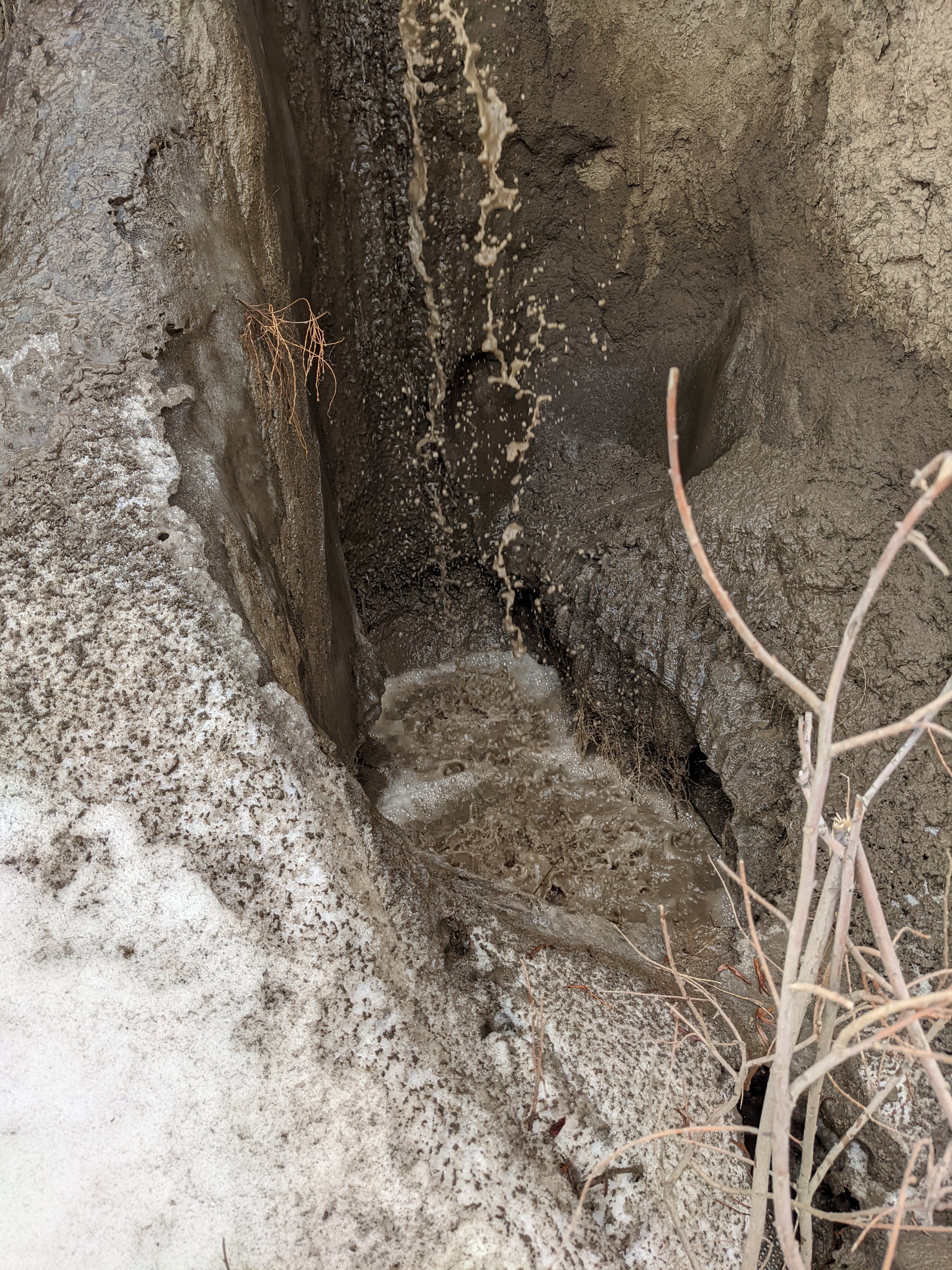
This is the “waterfall” coming off the road, above. About 10 gallons/minute. A zuni bowl will get built here, once it slows down, and a small pond will be dug into the side of the arroyo to hold the water for a couple months.
I can’t emphasize enough how much pleasure there can be in small achievements like moving some rocks and changing the flow of a rivulet. While there is so much more to accomplish, I want to take joy in the every day stuff.
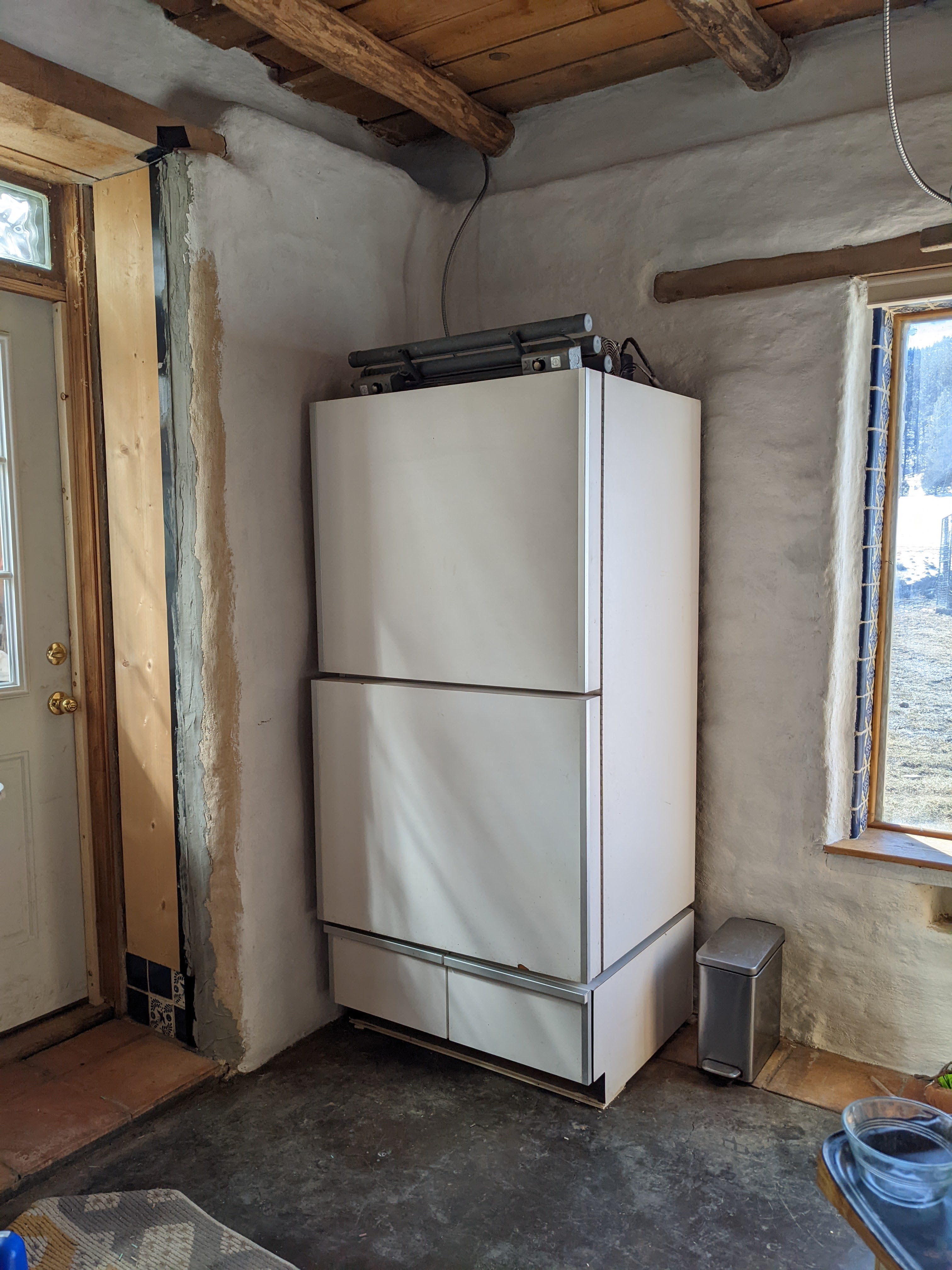
Next, Alan will run some wires for lights and hook up the FrostKing fridge, which we’ll move indoors. It’s not pretty, but it’s large and made for off-grid living: so well insulated that it can go for 10 days without electricity, even in summer, and uses only a tiny amount of power. We plan to enclose all that ugly compressor stuff on its top.
The FrostKing fridge, which has been living on the back porch for years, about to be moved indoors. I think they had planned on walling it in?
It’s been snowing off and on and we are expecting a few inches more through tomorrow. Being Sunday, I imagine we will have a quiet day of reading and writing.
May all beings everywhere be safe, be healthy, be happy and live in peace.
Alan and I took a few days off for R&R in Taos, NM. Taos is one of our favorite towns, one that we often think of retiring to, if and when we can no longer manage a place like 4Fords. We stayed at the Inn at La Loma Plaza https://www.vacationtaos.com/, ate at the fabulous Love Apple, took 2 awesome hikes and generally relaxed. We watched Jerry Arizona YouTubes in our room. Jerry’s videos chronicle his backpacking, hiking, and climbing adventures in the Southwest, and he’s very good and pretty funny.
We watched one about his worst near-death experiences while in the backcountry. It reminded me of my first similar experience.
It happened when I was in Crete over the 1971/72 holidays. I had flown to London to meet my parents, then on to Crete. We stayed in Heraklion for a few days, then my dad gave me the keys to a rental car (I was too young for an international license) and told me to catch up with them at the airport 8 days later for the flight back to Athens.
I had made vague plans to meet up with S., a college friend of my brother and J. He was living in the village of Loutro on the south coast of Crete with a bunch of hippies. We’d exchanged a couple of postcards: “Hey I’m coming to Crete, would love to visit”. “Sure, we’re in Loutro, come!” (Ahhh, the travel plans of youth.) I drove across the spine of Crete, a tiny dirt road at the time, which took several hours. Never saw another car, but had wine, bread, cheese and olives with some shepherds at the highest point. Here’s the link to part of this amazing route today: Road to Hora Sfakion . The road ended in Sfakia, and I parked the rental by the post office to ask if I could rent a boat to take me to Loutro (no ferry in those days). The postmistress was wonderful; she explained that all the fishermen were out and wouldn’t be back until after dark, but that, if I wanted, I could leave the car there and walk the 6 mile sheep trail used by the postman every week. That sounded good to me, so I packed my trusted Frostline kit backpack with a few things (I remember an ounce of pot, a couple of good books, a bathing suit, a canteen, a small first aid kit I always had on hand, and a camera).
The trail was decent, smooth, about 12″ wide, but it crossed a very steep, very exposed 45 degree slope covered in a mix of shale and loose dirt. At the bottom was the turquoise water of the Mediterranean, but it was about 1000′ down. You can see what it looked like in the picture below.
Loutro early 1970s
I was cruising along, about halfway there, and took a short break to eat some Smarties (the British ones, like M&Ms), and drink some watered down ouzo the postmistress had filled my canteen with. It was a beautiful day, the kind you see only in the Mediterranean, not a person around, just me and the trail.
When I went to sling my backpack onto my shoulder, the strap broke. The pack slipped down, pulling me with it. We started sliding, pack first, me, head down, following. The scree was sharp and there was nothing to grab. I caught a glimpse of blue water glittering very, very far below with nothing between me and it, and was sure I was going to die. I tried to get the pack off my arm, but the strap was caught. It felt like we slid faster and faster for a long way; it was probably about 200′. The pack stopped in a jerk, caught on the sharp edge of a rock and tiny sage bush sticking up through the scree, and my body caught on the pack.
It took me 5 minutes to catch my breath, slow my heart and think about how to get out of there. Very, very slowly, I got my foot jammed against the rock and slipped the pack off my arm. I thought about letting it go to splash into the sea, but didn’t want to lose everything, so I took a shoelace (early carabiner!) I had tied to the outside and used it to reattach the shoulder strap. But I didn’t put it on yet, thinking it might pull me over backwards. I wiped off a few small cuts with a bandana also tied to the outside of the pack, but was too nervous to get out the first aid kit. After that, it took me a long time, maybe an hour, to cautiously climb back up. I did it by moving on all fours, heading crabwise and at an angle to the trail, and moving the pack ahead and to one side of me in small pushes. Each step required me to dig into the scree with my foot (I was wearing Keds, shorts and a tank top, by the way), until it was buried 5-6″ down and felt a little solid, then doing the same with the other foot and one hand. The other hand would balance the pack and push. I’m sure it wasn’t nearly as organized as it sounds, but whatever I did, it worked and I eventually reached the trail. It felt like an Interstate. I sat and shook like a leaf for quite a while.
After tending to the cuts with bandaids, I got the pack back on and set out, making Loutro after another hour. I was covered in dirt, minor cuts and bruises, but in one piece. I found S. He took one look at me and we went swimming, leaping off 10′ cliffs into the perfection of the Mediterranean. All fear gone, a 17 year old’s sense of immortality restored.
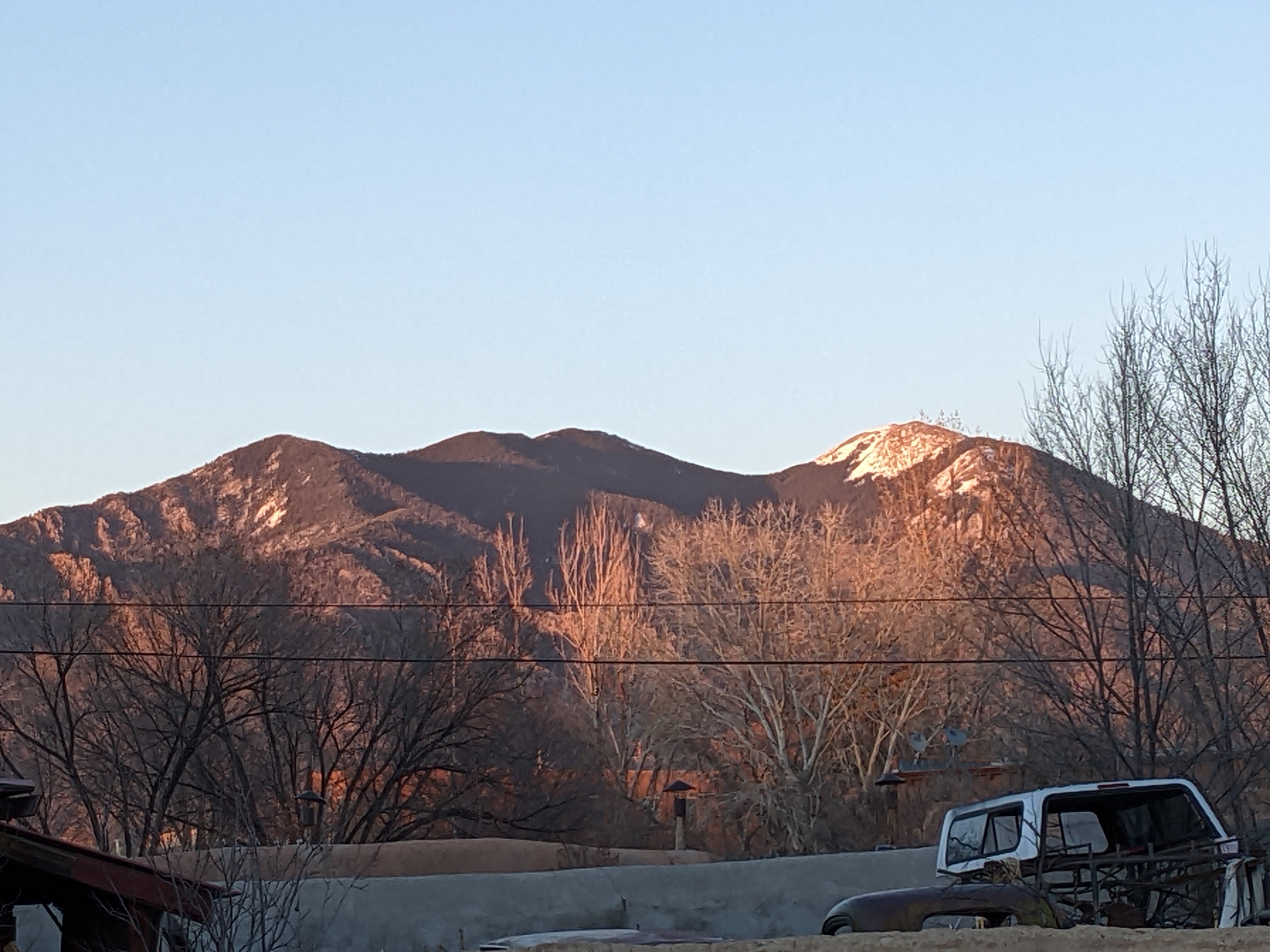
Taos Mountain
May all beings be safe, be happy, be healthy and live in peace.


















 4Fords Journal