Welcome to the season of change and color. We hope you all are getting out to enjoy the cooling weather. We are thinking of those affected by the hurricanes.
I just returned from a 3-day workshop at Ghost Ranch with Robin Wall Kimmerer, author of Braiding Sweetgrass. I am not one to go to, nor really enjoy workshops, but this one was superb and truly inspiring. Robin may be the best storyteller I’ve ever encountered, and her tales of Skywoman and the Twins were mesmerizing.
The focus on the workshop was to talk about parallel ways of knowing, “Traditional Ecological Knowledge (TEK) ” and “Scientific Ecological Knowledge (SEK)”. Robin is both an indigenous teacher and a research biologist, and her career has been working to bring these 2 ways of seeing the world into parallel (but not blended) ways of thinking, each important and of equal value in understanding our complex universe.
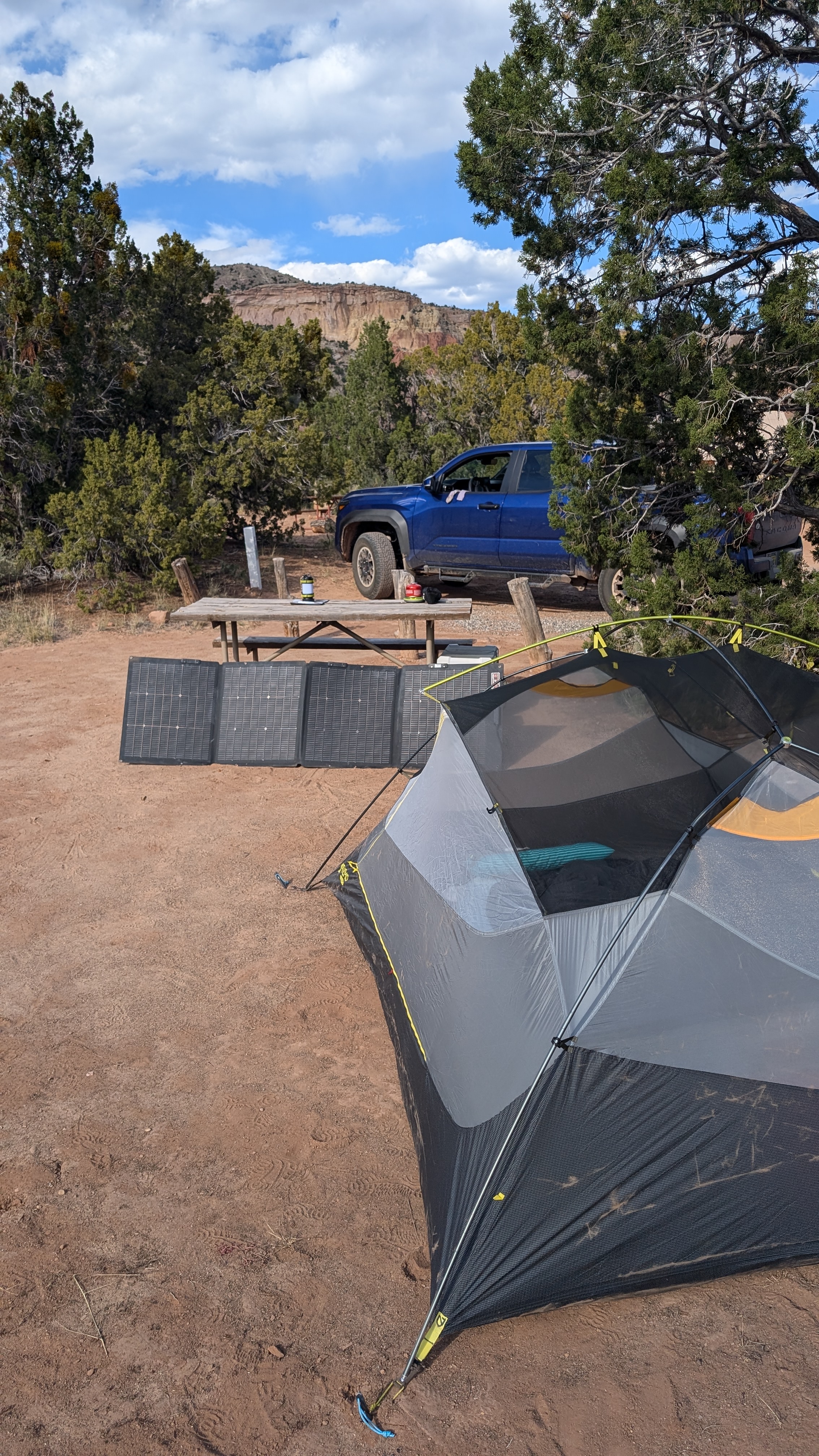
I stayed in the campground at the Ranch, as the weather was perfect, the views exquisite, and the cost much less! Alan stayed home with the pups, working on our neighbor’s solar project. It was a chance for me to test our new AC cooler, portable solar array and solar generator, all of which worked perfectly, keeping the cooler cold and the freezer frozen and my phone and lantern charged up.
Ghost Ranch truly is a magical place. If Alan and I stop by for a hike when it is empty, it looks a bit run-down and forlorn, as likely befits a 21,000 acre ranch run by the Presbyterian Church. However, when the place is busy with visitors, it comes alive and feels full of powerful energy. One volunteer, a young woman who has been coming from Boston to help every year since she was 15, said that the valley is a big bowl, surrounded by mountains, just waiting to be filled. It certainly was brimming with good vibes this weekend.
For the first time ever, I joined a Sound Bath, performed by Douglas of Lotus SoundBath in Santa Fe, which was very relaxing. He was set up in a giant yurt, which made the sounds of the gongs, crystals and singing bowls reverberate and move in amazing ways. Again, not usually my thing, but it was well worth it. I was wonderfully calm and happy all day.

A good portion of the weekend was spent talking about the English language, the language of conquest and colonialism. The language of erasure. Robin showed the audience how the word “it” is perhaps the most dangerous word in our language, as “it” allows us to objectify anything that is not human. And once objectified, “it” is easier to extract/kill/clearcut/destroy. Apparently, no indigenous language has a word analogous to “it”. Every thing in nature instead has a name that makes it a “being”. A tree is “being a tree”, for example. There are many times more verbs in the Anishinaabe language, and most native tongues, and many less nouns. And, being a “being” makes a tree or a land harder to destroy. If you see a blackberry bush as a “being”, not an “it”, you realize that picking the fruit is actually killing the plant’s children and you are more likely to act carefully before grabbing the berries and stuffing them in your mouth! There is actually a movement to replace “it” with a new pronoun, a Potawatome word I believe, aki, which means “earth”, and is an action word: “being earth.”
Thus, in most traditions, there is an Honorable Harvest code of conduct, if you will, that guides interaction with the other beings out there. If you are interested in knowing more, here’s a link that explains Honorable Harvest. I think many of us know these things, and may practice them already, but it is interesting that it has been sort of codified within indigenous cultures.
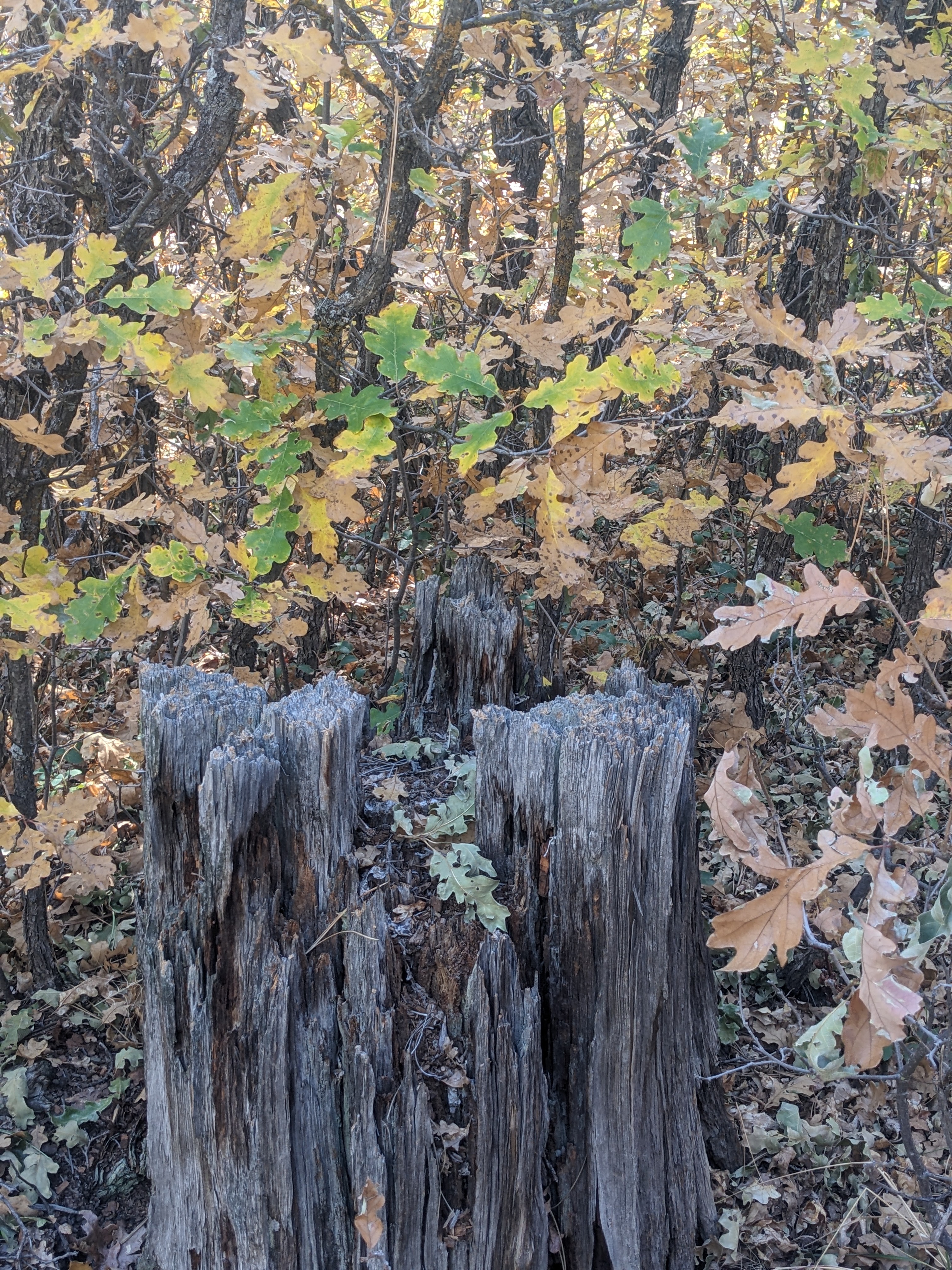
One of the things that came up again and again during the workshop was most of the participants intense fear of the future: feelings of hopelessness and despair over the state of the environment, the future of humans and everything else you can imagine. I do not feel that way. And I think that why I don’t feel that way is because of my daily, constant connection with nature. It may sound silly, but when I spend 6-8 hours every day in direct contact with the land, touching it, feeling it in my fingers, walking it, getting wet or muddy, watching it change day by day, following the plants and trees as they shift, I feel only the strength of the earth, and that gives me hope. The earth prevails.
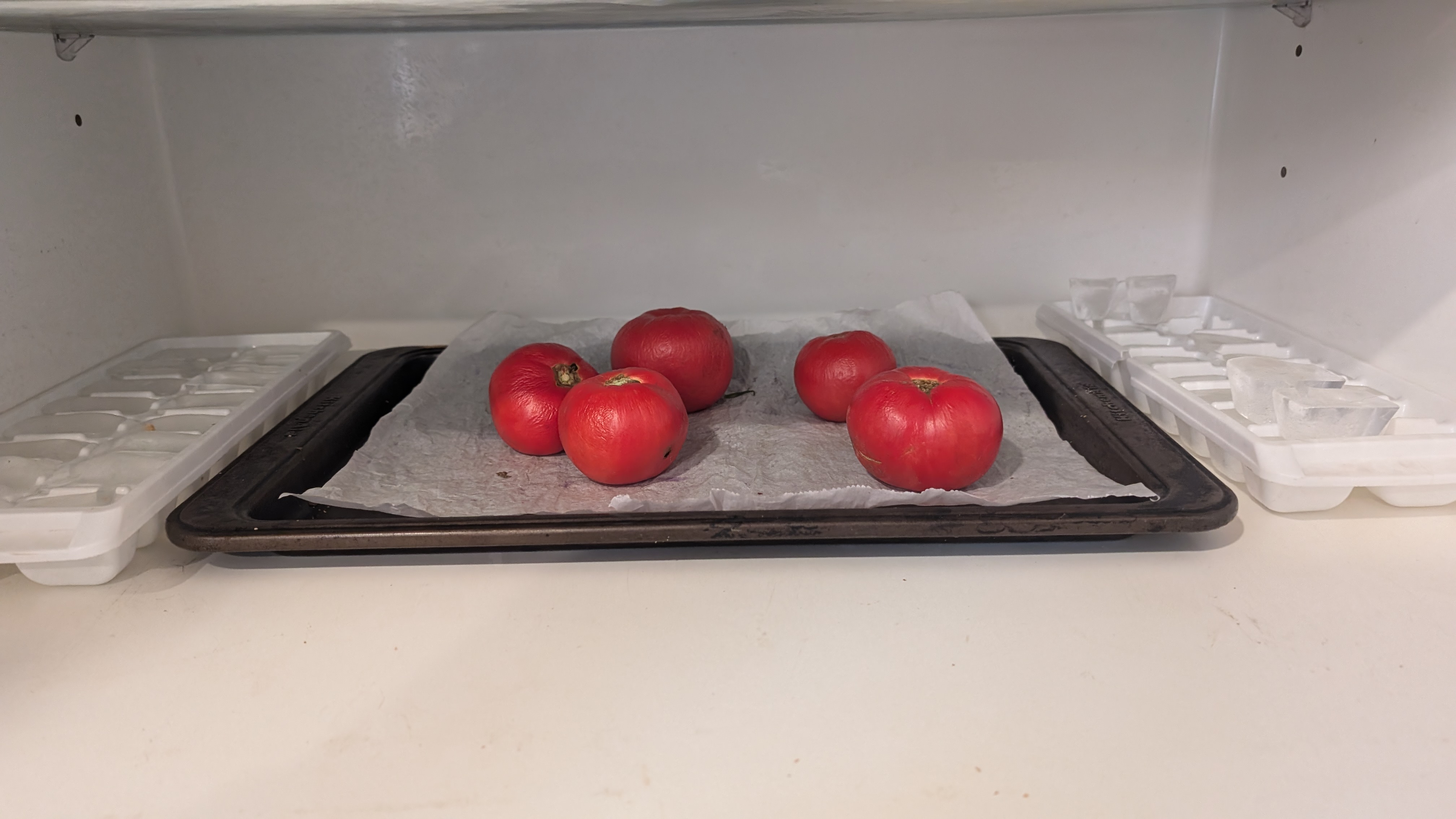
Speaking of Honorable Harvest, we ended up with a veritable cornucopia of food this year out of my meager garden. Over 50# of tomatoes, many of which are still ripening and I am busy drying and freezing. I don’t have the kind of time needed to do the sauce canning I have done in the past, but I don’t plan on wasting a single tom. I’m saving a few of the best for seeds next year.

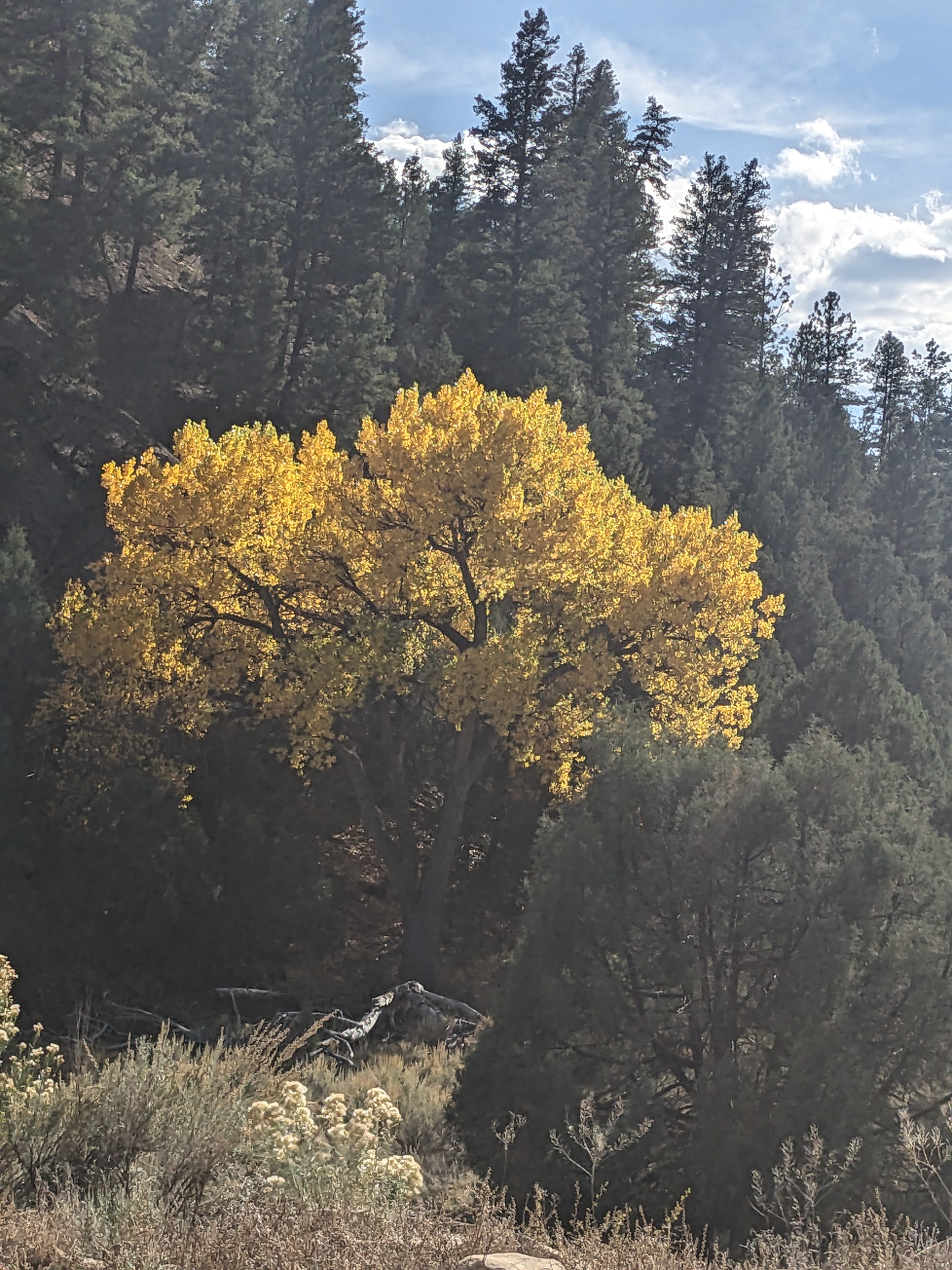
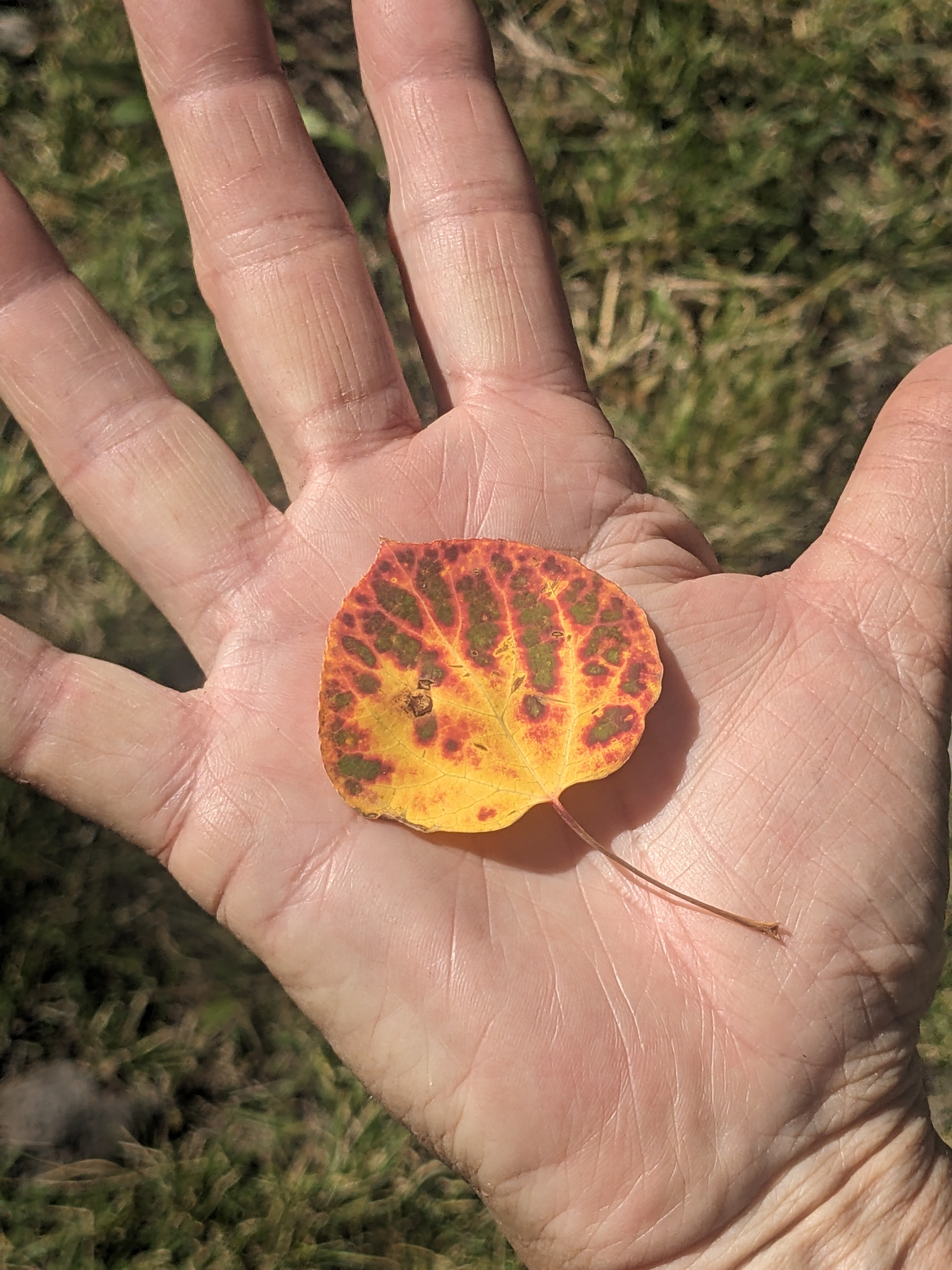
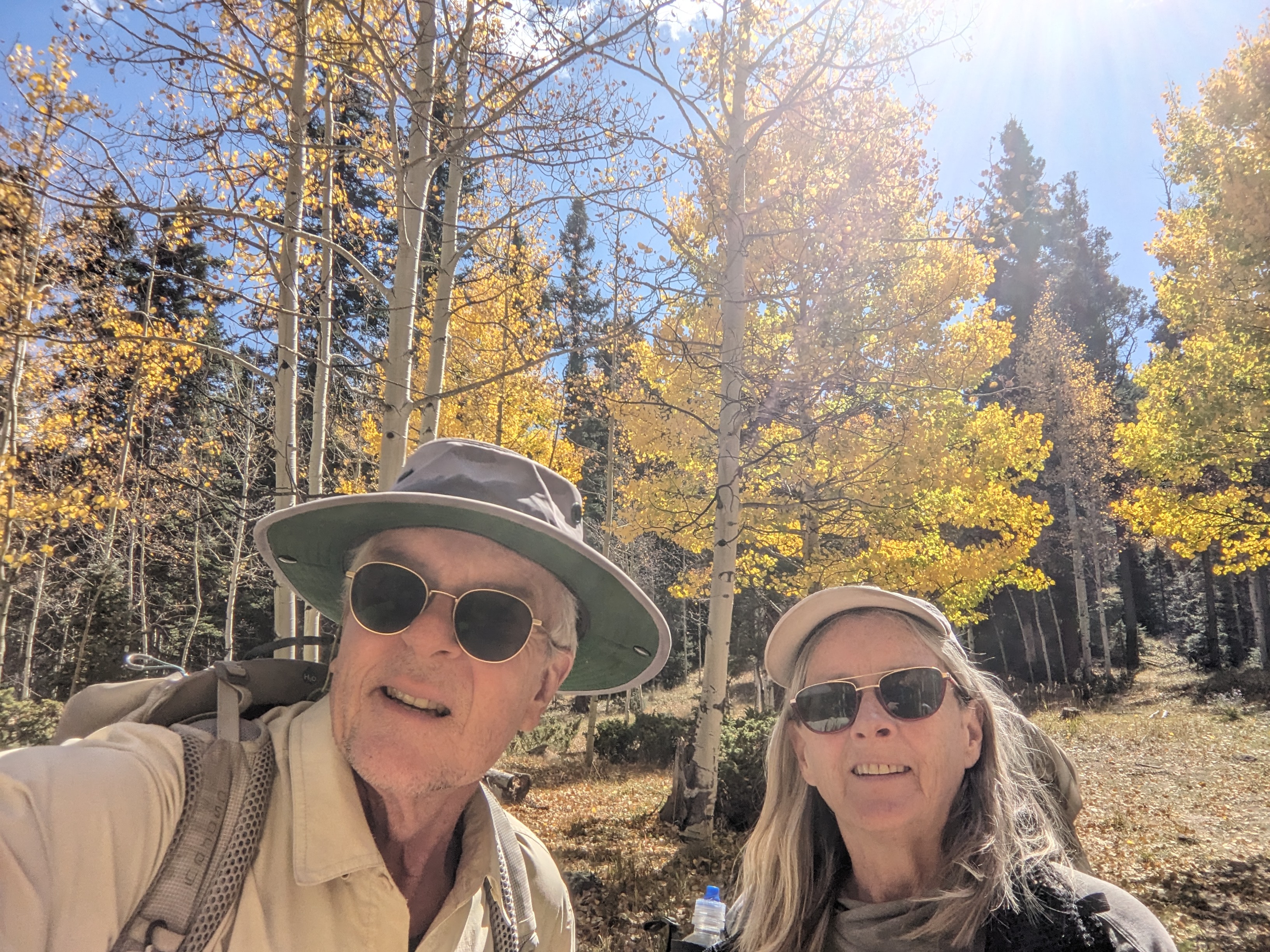
We did a wonderful, long hike up into the South San Juans recently, ending up at 11,000′ at a stunning lake. Many of the aspens were just past their peak, but then we’d come around a corner and be stunned by sights like this.

We are busier than we like in spite of, or maybe because of, our playtime. I am still teaching 5 classes, although 2 end today and another begins, so it will be 4 from here on out. Alan is still building solar arrays for folks. We are readying the house for winter: stacking firewood, closing up the gardens, rolling up hoses. The weather remains unseasonably warm for October (in the low 80s), but it is freezing at night now. I think we are expected to get cold this weekend.
Wishing you all a wonderful autumn and many good times.
Namasté
* Kimmerer, R. W. (2015). Braiding sweetgrass. Milkweed Editions.
 4Fords Journal
Sounds like an amazing time at Ghost Ranch!
LikeLike