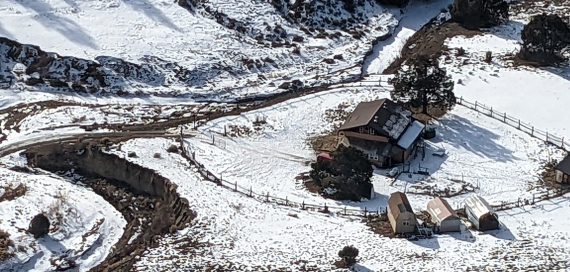

My classmate, whom I don’t remember at all except that she had long red hair, but I will call Dana, found out about a planned anti-war protest happening in Washington D.C. on May 3rd & 4th, 1971, and decided we had to go. While our school, The George School in Newtown, PA, was Quaker, and did not support the war, it also did not allow students to protest it, so we needed an excuse to leave campus for a few days. We made appointments for admission interviews and campus tours at Georgetown University in D.C. for Monday, May 3. I had already been accepted to Oxford’s experimental College in Alvescot, England and was going to be leaving the country just a few days later, so I had less than zero interest in GU, but it sounded good to the Dean and we were given permission to leave for 2 nights.
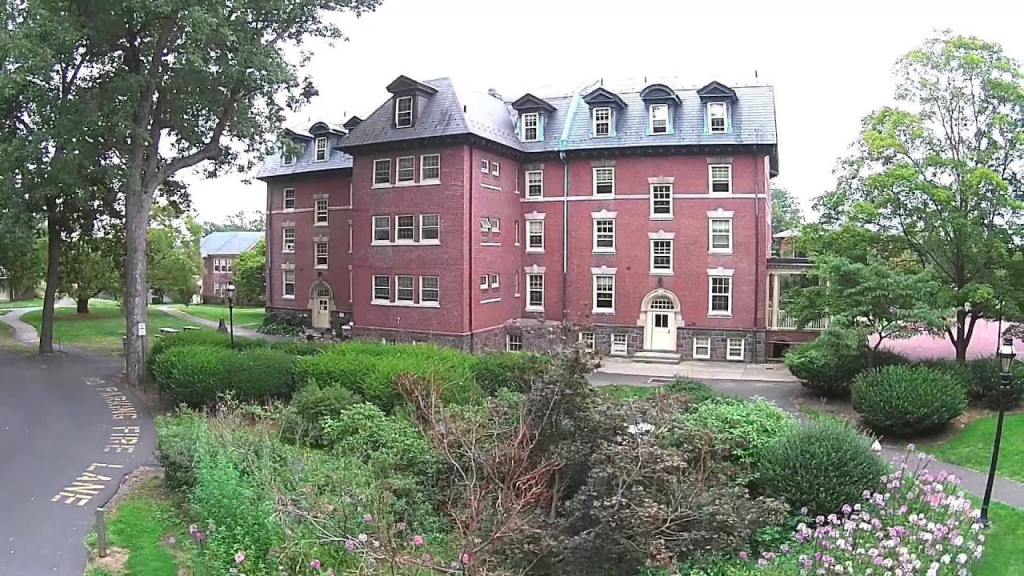
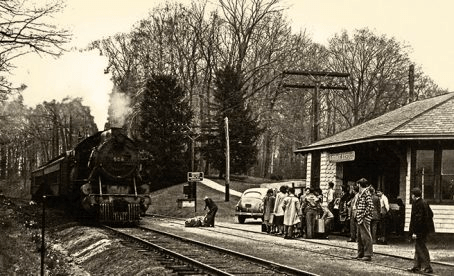
The train to Phillie came right through the school’s property which actually had a tiny station. I had used it a number of times for various nefarious activities. We flagged it down on Sunday morning, May 2nd, and made our way to D.C., arriving that afternoon. Rather than going to the dorms at GU, however, where we were set up to stay, we headed to West Potomac Park near the National Monument where ten thousand hippies had gathered for the march. We were immediately befriended by a young man who had driven his VW bus right up onto the grass and built a campfire about 100 yards from the monument. He and I hit it off and got stoned. He was in his early 20s, an Army veteran recently returned from his second tour in Vietnam, and was thoroughly against the war. Wearing his fatigues covered in anti-war slogans and peace signs, as was his bus, he looked quite the rebel.
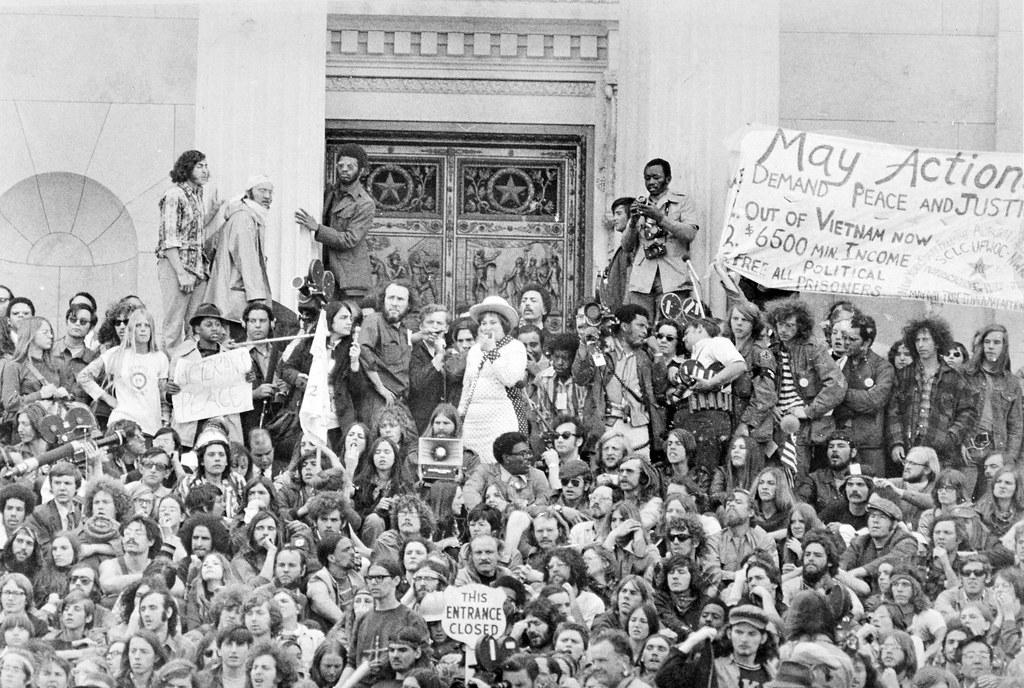
That same evening, May 2nd, Nixon rescinded the permit for the protest, making it essentially illegal to be on the streets of DC and sent the police to roust everyone. It was part of his “Operation Garden Plot” plan. The entire gathering, full of angry hippie righteousness, immediately marched for several hours through the streets around the park, singing We Shall Overcome and chanting “Hell no, we won’t go”. At one point, I found myself at the front of 10,000 marchers playing my guitar (which I never traveled without) in a round of Where Have All the Flowers Gone? Someone held a bullhorn to my mouth so I could be heard. It was a rush of adrenaline, let me tell you!
We were unable to go back to the park, as police were everywhere clearing it out, so my new friend who had smartly moved his bus to a side street in the GU neighborhood, let us sleep in it. (I wish I could remember his name, as he plays an important role at the end of this story)

The next morning, Monday, May 3rd, the day of the actual protest, we and our new friend decided to go to our interviews after all, as the main march was supposedly cancelled, replaced with hit-and-run tactics of stopping traffic and protesting in smaller “Affinity Groups” around the city. We weren’t quite sure what to do. But the GU campus was closed, apparently in support of the protesters, so the 3 of us ended up wandering back toward where we heard a large bunch of protesters yelling. Police in full riot gear were everywhere. Reports later said that, as part of “Operation Garden Plot”, over 10,000 federal troops were placed around the city to arrest anyone they came across. Except for Federal employees, it was illegal to be on the streets of D.C.

We were maybe 2 blocks away and walking past a construction site on Dupont Circle, when a police paddy wagon pulled up. 4 cops, in full riot gear, surrounded us, demanding IDs and asking why we were there. I tried to turn and walk away, but one officer grabbed a 2×4 – there were many lying on the ground – and whacked me across my back and arm. The next thing I knew, I was lying on the floor of the overcrowded paddy wagon, Dana next to me. My guitar was gone. I had a massive headache and I was PISSED OFF! Our new soldier friend had apparently not been picked up as he was in uniform (they must have missed all his anti-war stuff!), but he had told Dana that he would try to get us out.
Dana and I and about 20 folks were stuffed into the wagon, lying on top of each other, singing more protest songs. Our spirits were high. The cops, screaming at us to shut up, sent pepper gas into the space. Luckily I had a bandana, and another woman had some water, so I soaked it and put it over my face…a tactic I had learned from previous protests. Others were not so fortunate and had to deal with the horrible, stinging effects of the gas. Dana’s face turned a deep red and her eyes swelled shut.

Most people know that the majority of people arrested that day were held in the practice field of the (then-called) Washington Redskins and released from there without charges. Unfortunately, that was not the case for those of us arrested away from “Affinity Groups”, those of us not actively protesting. Dana and I were taken to the City Jail, where we were held without charges for 5 days in a cell meant for 4, but which now held over 20 men and women, including not just protesters, but prostitutes, drug dealers and car thieves. Dana and I were the youngest.
I made it harder for myself because I was purposely not carrying any ID. I didn’t want to be identified as a juvenile. I was just 17 and had heard that you could be sent to juvenile detention which was worse than anything! I was proud of that decision and not once during the total of 7 days I was in the system did I give up my name or where I lived.
Those 5 days in the cell are pretty much a blur, but I remember it was, believe it or not, mostly fun. There was pot to smoke and PBJ sandwiches to eat, although we were often hungry. A toilet in the corner that someone pulled a blanket around for privacy. We sang for hours and made up silly poetry. I was fingerprinted, but without ID and no record there wasn’t much the police could do. One by one, the others were released. More came. On the 5th day, the last of us protesters were removed. I discovered later that our military friend, looking for us, had given our names and said we that were “just kids from some private school”. Likely the school was looking for us, too and had called emergency contacts. (As an aside, my parents were out of the country and were not informed of the entire incident until after the fact).
Dana and I were moved to a juvenile police office, where we were questioned for hours about who our “leaders” were and who had “indoctrinated” us. It was strange. They taunted us with food. Eventually, Dana, whose face was still hurting and burned from the pepper gas, decided she’d had enough and told them her name, her parents names, and she was released to a relative who lived nearby. I, however, being me, refused to talk and sat on the floor in the middle of their office, stubborn and singing even more songs. At the end of that 5th day, I was escorted in a police car, with handcuffs and leg irons, to the Washington D.C. Juvenile Hall. By then and unbeknownst to me, my sister and our long-time family accountant who handled things when my parents were unreachable, were involved.
Of everything this long story covers, my 24 hours in Juvie Hall were the only ones that frightened me. That place was scary: tough street kids with homemade knives fighting in corners of the huge space, sexual harassment and assaults happening in the dark classrooms. I stayed safe by staying near the few other minors picked up at the protest.
At the end of that long 6th day, still believing that I was anonymous, I was moved to yet another location for the night, this time with other protester adults. It was a long, skinny, abandoned bathroom in the basement of the courthouse, a room with holes where toilets had once sat, and 8 broken sinks. Not a cell at all, but locked. Finally, on the 7th morning after my arrest, I was taken in front of a judge who explained that I was charged with obstruction of justice for not giving my name and not cooperating with police, but that he was dismissing my charges and releasing me to a responsible adult who would escort me back to school. However, they’d keep my fingerprints, just in case.

In the end, who was waiting for me outside but my soldier buddy. He had borrowed a friend’s clean uniform and looked like a soldier on leave. He had somehow worked his way through the system to find me, knowing only my name. He even had my guitar, which I had dropped when the officer floored me. He drove me back to George School in his VW bus, we said goodbye, and I sadly never saw him again. (The accountant had also sent a car to pick me up, but I turned it away to go with my friend.)
Once back at George School, the school nurse kept me in the infirmary for a couple days until it was time for me to leave for England. And off I went on another adventure destined to end in more police encounters!


May 3rd and 4th, 1971, were the days of the actual anti-war protests in D.C. Over 12,000 people were arrested on the 3rd, the largest mass-arrest in US history, and while there was gassing and some beatings, including me, no one was killed. On May 5th, a Nationwide Moratorium was organized to follow the MayDay gathering in D.C., protesting the deadly violence toward anti-war protesters by police at Kent State and Jackson State on May 4th and 15th, 1970.
On March 29, 1973, the last US soldier left Vietnam.
References:
(Any errors in getting this story straight are mine alone. It was a confusing time in our, and my, history).
https://en.wikipedia.org/wiki/1971_May_Day_protests#cite_note-1
 4Fords Journal