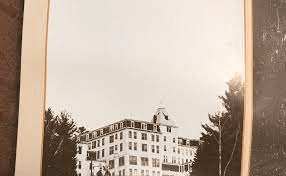
In Feb., 1972 I arrived at Franconia College in Franconia, N.H. to restart my college career (aborted so soon at Oxford). If you google it: https://www.nhpr.org/nh-news/2018-09-19/franconia-college-an-experiment-in-the-white-mountains-that-changed-a-n-h-town-forever (great article, by the way) you’ll get a little info about this short-lived school housed in an old hotel between the small towns of Franconia and Bethlehem NH. My father liked to tell everyone that I studied Poverty at the most expensive school in America, which was sort of true. I’m sure it was pricey and I did take a course called “Poverty in the Northwoods”, for which I recorded oral histories with old folks on farms in the area who lived below the poverty line. In exchange for their allowing me to record their stories, I did chores for them: chopping wood, repairing windows, stacking hay. That’s where I learned how to chop wood. I loved that class.

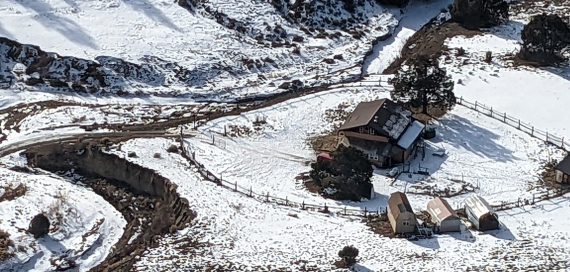
When I arrived in Franconia in my Corvair and with Shasta the dog, I discovered that while my tuition had been paid, my room and board had not, an oversight of my parents, who were settling in London and busy with their own lives. Unable to reach them, I spent the first 2 weeks living on the floor of the “music dorm”. Very quickly it became apparent that I was not cut out for dorm life. I hated the noise and constant partying and felt claustrophobic (something I still struggle with in crowds). By February I moved myself into a tiny abandoned shack built into the hillside several miles down a sugar road (a track that gives access to the sugar maples). It had a wood stove and a great view of the valley. There was 6′ of snow on the ground, and one of my professors (Michael Dorris, author of “The Broken Cord”, married to Louise Erdrich, also an author) lent me his snowshoes and xc skis so I could get around. I loved it and it was my first experience at living off-grid. I told no one where I was living, for fear of being kicked out. Shasta loved it too, and went with me everywhere. I made a little cash babysitting Michael and Louise’s son, who had Fetal Alcohol Syndrome (thus his book, above).
No surprise, Franconia was heavy into any drug you could imagine. On Friday nights, bowls of cocaine and dozens of handrolled joints sat on a table outside the dining hall for anyone to partake. PCP, Qualudes and LSD were endemic. Not so much heroin. Pot was allowed everywhere and not considered a “drug”. Already a daily pot smoker, I tried it all, but hated everything but the mushrooms). Meals were organic, local-sourced when possible, with vegetarian options. No one seemed to know I wasn’t supposed to eat there. Classes were hands-on. (Thus the oral histories and chores). I took classes in weaving, starting with shearing the sheep and making dyes from local dried plants. That’s where I began my learning of herbal uses. There were drafting courses, another anthropology class on Northwoods fiddlers. I joined the choir, learned the flute, and loved singing Mozart’s Requiem that spring in several local churches.
I made a great friend, R, who later became addicted to cocaine and died. Another friend, a gifted fiddler, jumped off the roof while high on PCP, playing his violin, and died. That’s what started my fascination with mental health and, in part, led me to become a Certified Addictions Counselor years later. It’s also a piece of why I am a MAPS (Multidisciplinary Association for Psychedelic Studies) counselor. Maybe I’ll get to Burning Man yet!
That spring, I met a bunch of hippies living on a commune up in the mountains, building an off-grid, self-sufficient, organic community. I stayed there off and on through the end of the semester and the following fall. It was a little TOO hippy-dippy for me in the end; (I was way more practical: more into blue jeans and work boots than flowers and long skirts; still am).
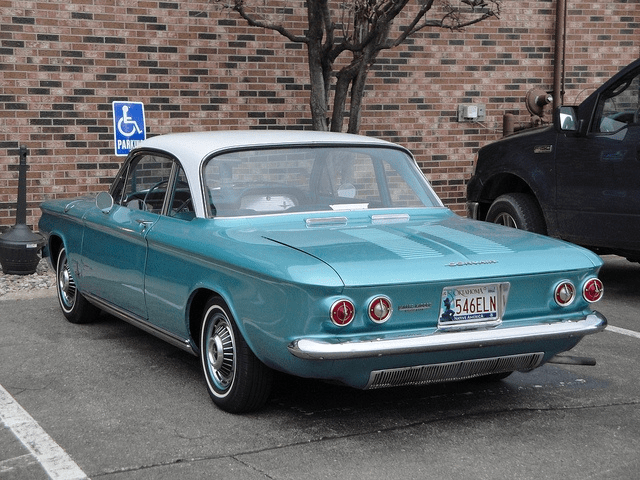
Only 2 weeks into the semester, I drove some new friends to Montreal for a Dead concert. We were just getting to the city when my Corvair died. Smoke and flames billowed from the rear (air-cooled, rear-engine). I pulled off the road and we sat there wondering what to do. Only a few bucks between us. The others decided to hitch to the concert and left me standing by the side of the road. Across the street was an auto repair shop. I walked over and talked to the guys there. They came and looked at the car, shook their heads (doubt they’d ever seen a Corvair, much less had a clue what to do with it). I offered them some of the pot we had hidden under the seat to take the vehicle off my hands and give me a ride to the concert. That was that! No title, no concerns about getting busted in Canada. No thought to the loss of the car. No, getting to see the Grateful Dead was much more important than a silly car I hated anyway! The deal was made, I got a ride, and the next morning we all hitched back to school. That was my first serious experience with the Buddhist concept of non-attachment!
Over spring break, my parents came back to the US for a visit, staying at the Morris County Golf Club. They bought me a car for my 18th birthday: a 1968 Volkswagen bus, the kind with the sunroof and little windows all around the top. It cost $800. I was in love. In order to care for it I took the 40-hour mail-order course that VW offered, sort of a hands-on “Idiots Guide to VW Repair”. I became a Certified VW Mechanic, believe it or not. Actually had the framed certificate they sent me for years. For the rest of my time at Franconia I made money by doing tune-ups on my classmates VDubs.

Several weeks after getting the bus, I was teaching my friend R how to drive a stick. She missed a downshift and turn and crashed the bus through a telephone guy wire and into the concrete embankment by the onramp for I-93 going 50mph. Amazingly, the bus sustained only front end damage (no engine up there, right?). The telephone pole fell, narrowly missing the bus. R was shaken but unharmed, but I split my head open, requiring me to hitch a ride from some students going to Littleton to the hospital with a hoodie wrapped around my bloody head. I got 87 stitches in my cracked forehead and an immense migraine. And arrested for leaving the scene of an accident (charges later dropped). The first of many concussions, and why I keep up on current research on TBIs (traumatic brain injuries).
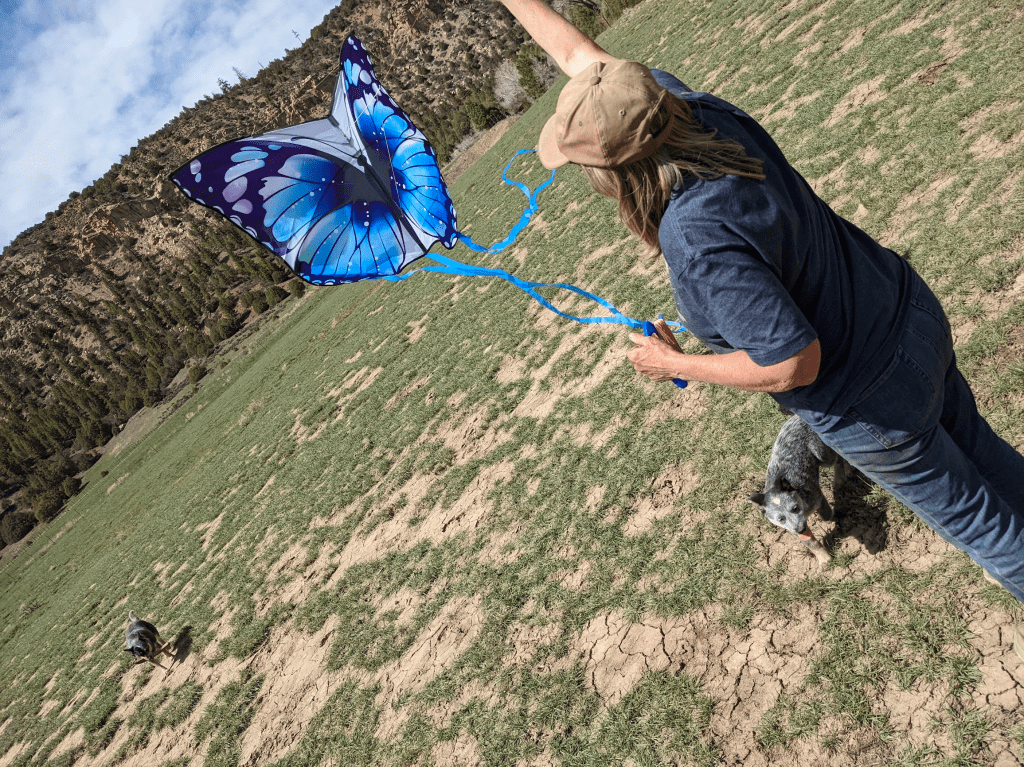
These are just a few stories from a tumultuous year of my life. One story leads to another and to another and add up to a life that may seem a bit crazy, but made sense at the time. All those experiences are who I am today and go a long way to explain my side of why Alan & I are doing what we do. All things are connected. Butterfly wings included.

 4Fords Journal
I absolutely love your storytelling blog entries!
67 stitches‼️
What an amazing person you are.
LikeLike
Thanks! Hardly amazing, but definitely a bit reckless in my younger days!!
LikeLike
I remember visiting you at Franconia. Crazy place!
LikeLike
No kidding. I remember your visit. That article I linked really nails the place. When I was there the president was Leon Botstein, a NYC conductor and President now of Bard College. He taught me the flute.
LikeLike
Seriously?! You guys are both amazing. xo, Lili
LikeLike
Are those butterfly wings the same ones that affect the weather in China?
LikeLike
Absolutely!
LikeLike
Rusty!, you are amazing. You have led a really interesting life after KPS, I’m so impressed. So glad to have subscribed to your journal, but I think you should write a book! I look forward to your next post. xo, Lili
LikeLike
I’m writing this so I don’t have to write a book! Way more fun…😁🙏
LikeLike