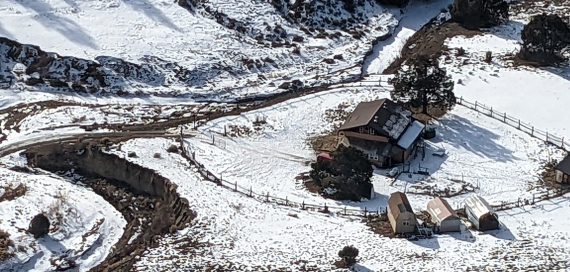
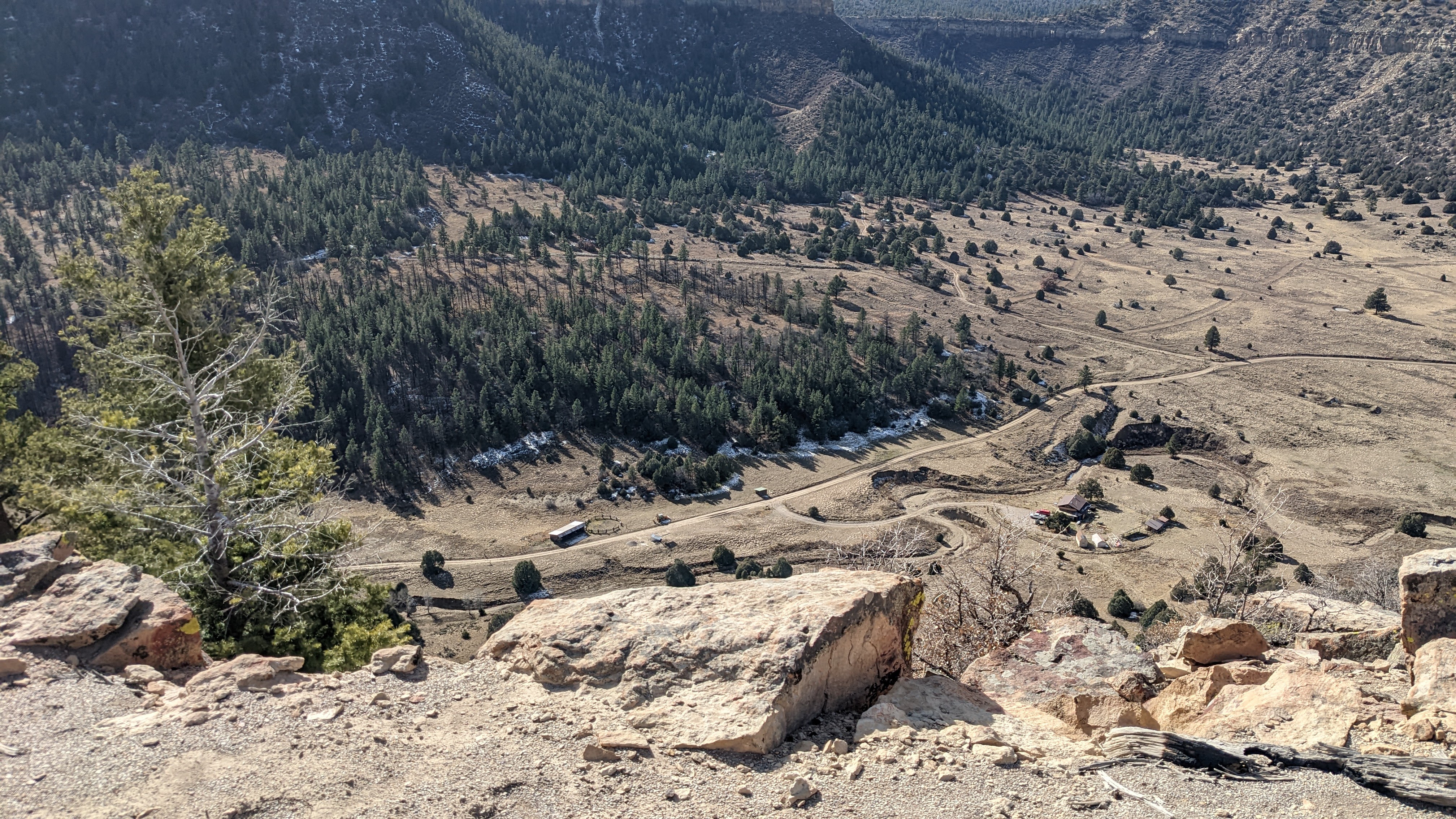
Alan and I did not set out to make a political statement when we moved to 4Fords. Our motivations were much simpler: to simplify our lives, which had become quite overwhelming at our lovely home in Bayfield, what with complex and expensive upkeep and projects, to save some retirement money by cashing in on the real estate boom, and, most importantly, to put our lifetime of skills and knowledge to the test of living comfortably off-grid and environmentally more lightly on the land.
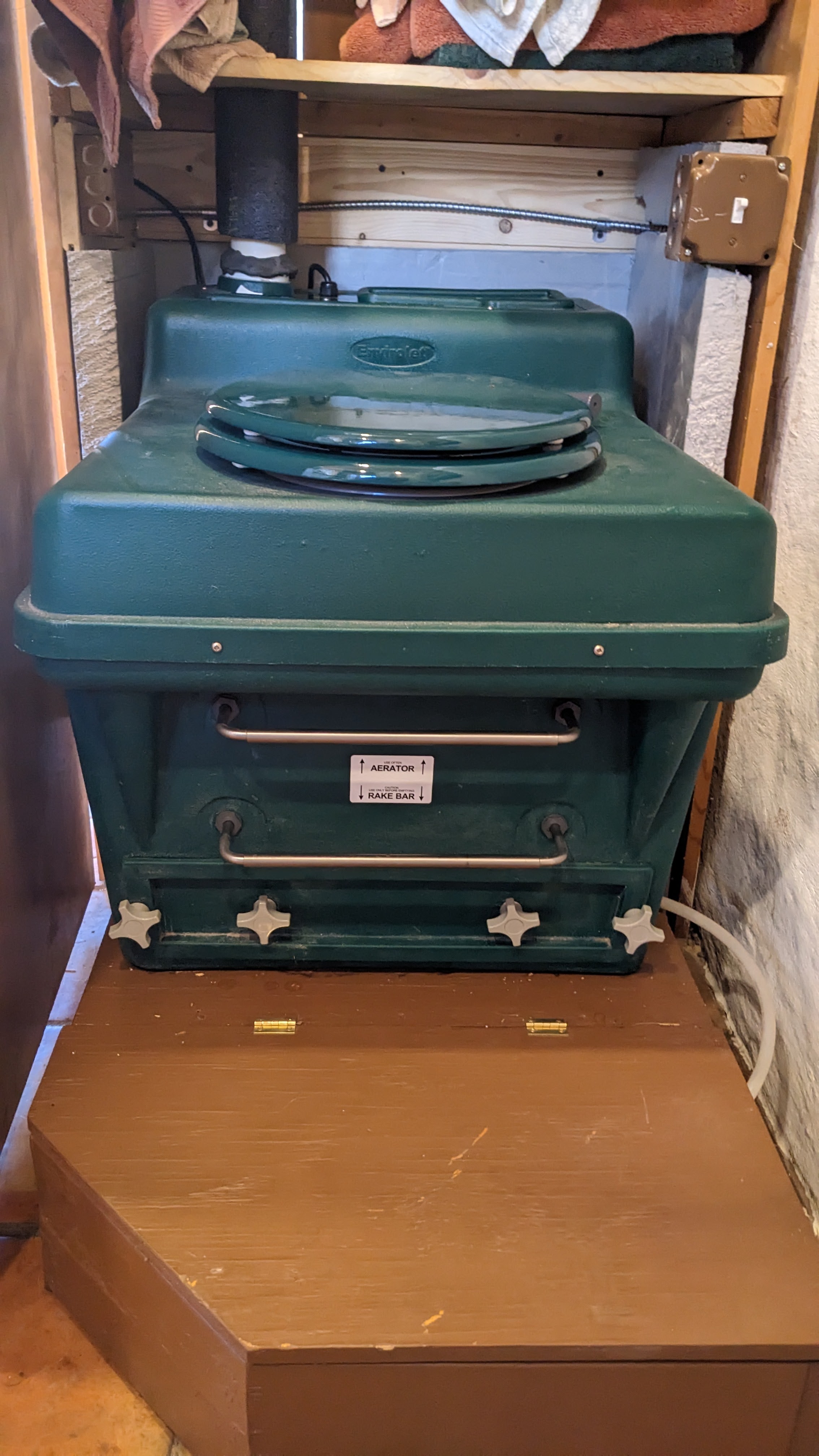
The verdict is still out, but, so far, we seem to be making headway. Recently, Alan put the finishing touches on our indoor composting Envirolet. We have an indoor toilet after 15 months of outhouses! A red-letter day, (if it works properly!) and one that makes me think about our relationship with water.🚰 That’s where our actions might be seen as political.
It is highly likely that water will become the next “resource grab”. It’s already happening in Arizona, where Saudi Arabians were given (by the Bureau of Reclamation) thousands of acres of alfalfa fields with *unlimited* water rights. They sunk deep water wells to irrigate them. Those wells are causing surrounding, older wells (wells that belong to long-time farmers) to go dry. The alfalfa is being shipped to Saudi Arabia. Saudi Arabia does not have enough water to grow their own alfalfa. They are essentially taking the water (and land and produce) that Arizona desperately needs and putting farmers out of business. In the middle of the worst drought in thousands of years. That stuff pisses me off. https://www.azcentral.com/story/opinion/op-ed/2022/08/11/saudi-firm-fodomonte-pay-arizona-groundwater-use/10271103002/
87% of Americans pay for their water from municipal water systems. Many of those are for-profit organizations (although it’s almost impossible to find out which ones, according to the GAO). The rest of us have private wells or haul water in big tanks that live in the bed of a pick-up or on a trailer. At least 25% of that clean, sanitized water is flushed down our toilets: https://fm.okstate.edu/energyservices/energymanagement/blog/money-down-the-toilet.html#:~:text=The%20toilet%20alone%20can%20use,average%20water%20consumption%20per%20day.
50% of irrigation comes from groundwater wells. And 20% of those are at risk of running dry. https://www.scientificamerican.com/article/millions-of-groundwater-wells-could-run-dry/ The second largest subdivision in the US (Aspen Springs in SW Colorado) has no water. http://www.aspenspringsmetro.org/Did-You-Know-.html (Aspen Springs). Residents must buy their water from a nearby commercial well company, and are at the mercy of their prices.
Interestingly, New Mexico encourages residents to “capture” water for personal use, while Colorado considers water to be a resource best managed by the state. You can only save 110 gallons in Colorado off your roof, where cisterns holding thousands of gallons are common here in NM. New Mexico’s motto seems to be to keep the water where it originates. Colorado’s seems to be to control the flow downstream for maximum profit. I love Colorado, but think they may have this one wrong.
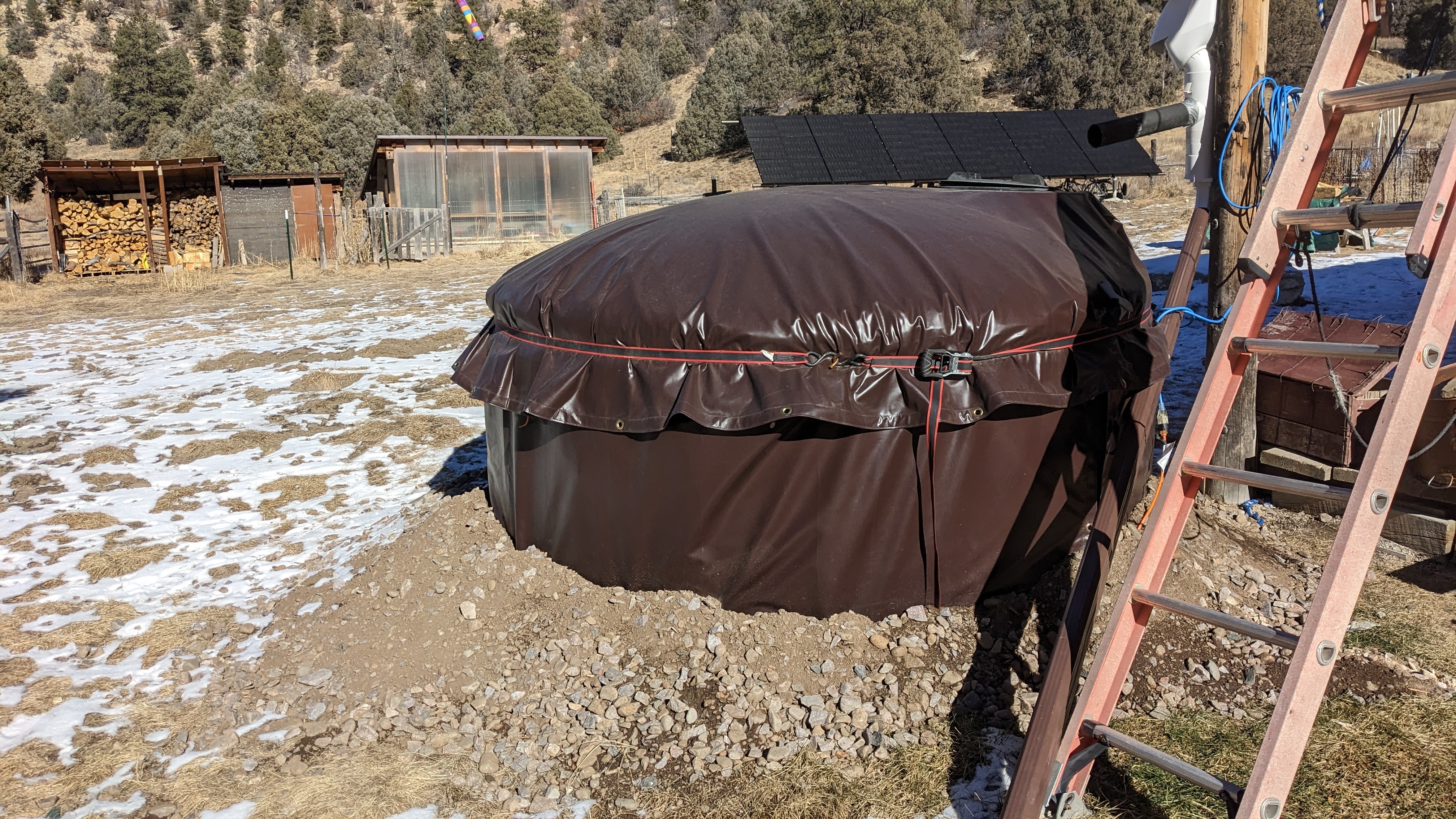
Here at 4Fords, we have developed an almost sacred respect for water. We are lucky to have 2 sources: our well that produces 4 gallons/minute, but is non-potable. Good for rinsing dishes, washing hands, and laundry, but not for gardening, cooking or showers…yet. As I have mentioned before, we (….read Alan) are working on improving that by installing big, commercial-grade filters in the well-vault. Our other water is currently stored in an 1100 gallon aboveground rooftop rainwater cistern. It is working out perfectly. Insulated, it has not frozen in the -8 degree nights yet. Filtered, it makes wonderful drinking water. We pump it into an indoor tank every 2 weeks, which gravity-flows into the bathroom and kitchen sinks.
How many of us think about where our water comes from and the work it takes to get it to our tap? We tend to take it (and waste it) for granted….I know I did…..but it really is a complex luxury. Should it be a for-profit business, or is it a human right to have clean water?
 4Fords Journal
You guys are amazing. Hope the new toilet works!
Seems likely that water has always been political for humans. But also seems likely to become more contentious given the convergence of climate change and population growth.
Regarding agriculture, although I am not an expert it seems to me to make a big difference whether crops are watered with surface water (i.e., rainfall captured in reservoirs) versus pumped out of deep aquifers. As I understand it, most of the water that does into growing alfalfa or beef passes through the plant or animal back into the atmosphere. And when a person eats the alfalfa or beef they capture and use and ultimate pass that water to the atmosphere. I think. Could be wrong. Anyway, point is that when the water is being sucked out of deep aquifers it is difficult for the water to get back to them.
Love,
Steve
LikeLike
So true, Steve. Water has always been an issue….but once profit gets involved, its problems only grow.
Recharging aquifers is a slow process and challenging on many fronts. Some aquifers (Ogallala, for one) are isolated and have no recharge mechanism such as underground rivers…they rely only on rain/snow and much of that is lost due to unhealthy farming practices (run-off). As I understand it, groundwater used for ag becomes more polluted and saltier over time, so while much of it can be reused, it takes more and more energy to purify. If I get it right, run-off water from California’s central valley ends up in the Los Angeles water system, not back at the farm. Some water gets recycled through photosynthesis and food, and thank goodness for that! But most water will never return to the mountain snow pack (think Colorado River). It’s a complex conundrum, and I certainly don’t understand it very well….but being here in the desert puts it right in our faces every day! Take care and Merry Christmas, Rusty
LikeLike
as long as population increases, resources will decrease. Beside Global warming, 100 years ago nobody had this conversation. because there was not as many people…
LikeLike
So true! But drought/flood conditions are also worse than they’ve been, which adds to the issue.
LikeLike